Obviously this involves already existing projects, but there have been recent developments, some of which are coming to a head. And energy is a long game anyway.
It initially neither occurred to me nor would have interested me to go looking for this.
Over time, though, I’ve seen more and more similar stories on the periphery of what I’ve been looking at in Syria. This post is one that I decided to spend a little time on to see what would happen.
And by a little time, I mean like 20 minutes. It took way longer to format this into WordPress than it did to find the stuff.
And things become pretty clear pretty quickly. Most of this is pretty self-explanatory.
Hong Kong (CNN)Russia switched on an enormous gas pipeline to China worth billions of dollars Monday, affirming increasingly close economic and political ties between the two countries.
ISLAMABAD, Feb 7 (Reuters) – Pakistan has signed a provisional agreement with Russian energy giant Gazprom on a feasibility study for an offshore pipeline that would supply natural gas from the Middle East to Pakistan and other parts of South Asia.
The memorandum of understanding is the latest in a series of energy-related agreements between Pakistan and Russia, former Cold War foes who have grown closer in recent years.
Now Sechin, one of the closest allies of President Vladimir Putin, said that given Baghdad’s reluctance to work with Rosneft, his firm would instead do business with the Kurdistan Regional Government (KRG), which showed “a higher interest in expanding strategic cooperation”.
Energy giant Rosneft struck major deals with Iraq’s Kurdish region in 2017. Today, it has yet to cash in on them.
But when, in the early 2010s, Russian energy companies sent delegations to probe for potential oil deals, KRG’s western partners became nervous. According to a former Russian diplomat who spoke to Al Jazeera on condition of anonymity, the UK‘s foreign office, in particular, was worried.
In a 2012 conversation with him, British officials expressed their concern that the Russian companies’ entry into the Kurdish energy sector could stir trouble by giving the KRG political backing to go against the common consensus among the UK, US, Turkey and Iran that the Kurdish region should remain part of Iraq.
In 2012, Russian state-owned energy giant Gazprom signed a contract for exploration and oil production in two blocks in the Kurdish region and just a year later KRG’s President Masoud Barzani went on a four-day visit to Moscow, meeting with Russian President Vladimir Putin and Gazprom CEO Alexei Miller.
Four years later, the fears of the British Foreign Office proved justified. A series of energy deals that another Russian state-owned energy company, Rosneft, concluded in 2017 with the debt–laden KRG, saved it from economic collapse and helped it gain enough political leverage to pursue an independence referendum on September 25 of that year, against the advice of all of its close allies, including the US and the UK.
The pipeline would be a competitor to the Nabucco pipeline from Azerbaijan to Europe.[1]It is also an alternative to the Qatar–Turkey pipeline which had been proposed by Qatar to run from Qatar to Europe via Saudi Arabia, Jordan, Syria and Turkey.[14] Syria’s rationale for rejecting the Qatar proposal was said to be “to protect the interests of [its] Russian ally, which is Europe’s top supplier of natural gas.”[14]
The Pakistan deal is probably also a victory for Russia over Iran who had previously hoped for deal with Pakistan years ago, one that various other parties wanted to blocksuch as Saudi Arabia.
BEIRUT — During a Middle East tour last month, US Secretary of State Mike Pompeo focused primarily on Iran’s influence in the region, but on Mar. 20 in Jerusalem he also labeled Russia an adversary of US regional allies in addition to Iran and China when speaking about energy and security in the eastern Mediterranean. “Revisionist powers like Iran and Russia and China are all trying to take major footholds in the East and in the West,” Pompeo said, alongside Israeli Prime Minister Benjamin Netanyahu and the leaders of Greece and Cyprus.
Rosneft’s foray into Lebanon’s energy market has raised questions over Russia’s political ambitions, write Jonathan Brown in Moscow and Sunniva Rose in Beirut
Russia’s recent purchase of an ageing oil storage centre in Lebanon is part of the Kremlin’s latest push to assert its influence across the region through energy deals with political overtones.
When Russia began its military intervention in Syria, it was motivated more by political incentives than economic ones. However, now that victory increasingly favors the Assad regime, Russia has found new opportunity to bolster its foothold in the region. With the opposition forces relatively subdued and prospects for stability appearing more realistic, Russian energy companies are looking to renew and expand their investments in the Syrian energy sector. But their aim is not to explore and extract Syria’s modest petroleum reserves—Russia has plenty. Rather, they seek to actively participate in rebuilding and operating Syrian oil and gas infrastructure. By undertaking such a massive endeavor, Russian energy companies hope to control significant portions of pipelines, liquefaction facilities, refineries, and terminals, thus capitalizing on Syria’s potential as a transit hub for regional oil and gas heading to Europe. In doing so, Russia will not only expand its dominance in the Eastern Mediterranean, a dream since the Caucasian Wars of the nineteenth century, but also solidify its stranglehold on the European gas supply.
HALIFAX, Canada ― Congress’s must-pass defense policy bill will be the vehicle to stop Russian President Vladimir Putin’s $11 billion project to deliver natural gas to Europe via a new pipeline from Russia to Germany, a top U.S. lawmaker revealed Friday.
Sanctions on companies involved in the Nord Stream 2 pipeline have been added to the draft 2020 National Defense Authorization Act, Senate Foreign Relations Committee Chairman Jim Risch told Defense News on the sidelines of the Halifax International Security Forum.
The inclusion of the sanctions in the bill is a strong sign, but House and Senate lawmakers have yet to reach a final deal on the massive bill.
“The reason for the push is that this window is closing. A lot of Nord Stream is done already,” said Risch, R-Idaho, adding he believes the sanctions will persuade the construction firms involved to stop work on the project.
“It will cost them dearly. I think if those sanctions pass [the companies] will shut down, and I think the Russians will have to look for another way to do this, if they can do this,” Risch said.
New pipeline projects throughout the Middle East could boost Russian influence there while also ensuring the country’s role as the prime supplier of energy to Europe.
As Washington readies itself for a diminished role in the Middle East, Moscow is laying the groundwork for a significant long-term presence. By acquiring pipelines and exploration rights in Turkey, Iraq, Lebanon, and Syria, Russia is building a land bridge to Europe through the
Middle East. In doing so, it will cement its role as Europe’s primary gas supplier and expand its influence in the Middle East, posing serious risks to U.S. and European interests.
Russia already supplies 35 percent of Europe’s total gas imports, and it has long worked to head off any European efforts to diversify energy supplies. Here, Russia also has to worry about its abysmal relations with Ukraine—the conduit for most of its Europe-bound exports. Building an energy transit network through the Middle East would allow Moscow to stay in the game.
The three pipelines will make Europe even more dependent on Russian gas while also driving deeper the wedge between the United States and the European Union.
In this new network, Turkey is one of the most important transit points. The Russian state-owned gas company Gazprom already operates the Blue Stream pipeline, which handles approximately 16 percent of Moscow’s gas exports to Europe, via Turkey and Bulgaria. Now, a second pipeline, TurkStream, is expected to come online before the end of this year. It will transport approximately 14 percent of Moscow’s gas exports to Europe, via Turkey and Greece. These two pipelines come on top of Nord Stream 2, and together, all three will make Europe even more dependent on Russian gas while also driving deeper the wedge between the United States and the European Union over Russia’s use of energy infrastructure as a political weapon. Together, the three pipelines will be more than enough to replace exports that make their way to Europe through Ukraine.
Another leg of the new network will run through Iraq’s semi-autonomous Kurdish region before connecting to Turkey’s pipeline network for further export to Europe. In September 2017—days before the Kurdistan Regional Government (KRG) held an ill-fated referendum on independence—the Russian state-owned energy company Rosneft inked an agreement with the KRG to fund a $1 billion gas pipeline from Kurdistan to Turkey. The pipeline is expected to be able to meet approximately 6 percent of Europe’s yearly gas demand. And then, in October 2017, Rosneft took a controlling interest in an existing KRG oil pipeline to Turkey for $1.8 billion. That pipeline has been at the heart of strained relations between Iraq’s central government and the KRG since 2013, when Erbil began unilaterally exporting oil to Turkey through the pipeline, a move Baghdad criticized as a major constitutional violation.
Russia has leveraged the tense relationship between Baghdad and Erbil to reap the most lucrative contracts possible. In the aftermath of Russia’s expansion into Kurdistan’s energy sector, Igor Sechin, the head of Rosneft, sent a letter to the Iraqi central government stating that since Baghdad had showed a “lack of constructive position and interest” to work with Rosneft, his firm had no choice but to do business with the KRG, which had demonstrated “a higher interest in expanding strategic cooperation.”
The gambit worked: Baghdad, seeking to peel Moscow away from Erbil, opened negotiations with Rosneft to tender construction of a new oil pipeline from the Kirkuk oil fields to the Turkish border, avoiding KRG territory. The new pipeline would replace a previous one that was destroyed during Iraq’s war with the Islamic State.
In Syria, meanwhile, Russia won the exclusive right to produce the country’s oil and gas in January 2017. On paper, that doesn’t amount to much: Syria’s proven oil reserves stand at 2.5 billion barrels (roughly 0.2 percent of the global share), and its proven natural gas reserves are insufficient to meet even domestic consumption. But Syria’s main value to Moscow, like Turkey, lies in its location as a transport hub for exports.
In Syria, meanwhile, Russia won the exclusive right to produce the country’s oil and gas in January 2017.
Russian oil machinations in Syria started well before the Kremlin’s 2015 military intervention. In 2009, Qatar proposed the construction of a pipeline to send gas from the massive South Pars/North Dome field (which it shares with Iran) via Saudi Arabia, Jordan, Syria, and Turkey. At Russia’s behest, Syrian President Bashar al-Assad refused to sign the plan, since Russia fearedthat the deal would diminish its own role in Europe’s natural gas market. As an alternative, Russia reportedly gave its approval to the construction of the Iran-Iraq-Syria pipeline under the assumption that it would have an easier time dealing with Iran than with Qatar.
The ensuing revolution placed those plans on hold, but Russian activity is likely to increase as Syria turns to reconstruction. Assad has already stated that reconstruction will likely cost between $200 billion to $500 billion, with first priority in all contracts going to Moscow. With the Trump administration deciding to leave Syria as Russia remains firmly ensconced there, any energy infrastructure projects that transit through Syria will need Moscow’s approval. Indeed, Russia is already poised to reap major rewards as the United States abandons Syria’s largest oil field with its withdrawal.
Moscow’s involvement in Lebanon has a Syria angle as well. Russia has deepened commercial ties with Lebanon as part of its efforts to roll back U.S. influence in the region, with trade between Russia and Lebanon nearly doubling from $423 million in 2016 to $800 million in 2018. Lebanon’s offshore oil and gas sector has also favored Russian companies. The Russian firm Novatek won a 20 percent stake in two offshore exploration blocks last year. More blocks are expected to be auctioned this year.
But Russia’s primary interest in Lebanon is as a conduit to Syria. In January, Rosneft signed a 20-year agreement for managing and upgrading an oil storage facility in Tripoli, Lebanon, which lies just 18 miles from the Syrian border and is 37 miles from the Russian-controlled Syrian port of Tartus, Moscow’s only foothold on the Mediterranean Sea. The deal’s value has been kept secret, but the facility’s proximity to Syria could allow Moscow to use it for covert fuel deliveries to the Assad regime—an activity U.S. Treasury sanctions have sought to thwart.
None of this is to say that Moscow’s energy land bridge is an imminent reality. Syria’s reconstruction remains several years away, and the country’s value as an energy hub will be worthless as long as it is under crippling U.S. sanctions. Turkey and Iraq hold the most immediate promise for Moscow’s energy ambitions, while Russian involvement in Lebanon and Syria demonstrates that Moscow is digging in for the long game in order to secure and expand its energy monopoly over Europe.
If Russia succeeds in its plans, the implications for European security will be profound.
But if Russia succeeds in its plans, the implications for European security will be profound. A Europe even more dependent on Russian gas will lose significant leverage over the Kremlin, constraining its ability to punish the country for transgressions like the killing of Russian defectors on European soil. There would be little to prevent Putin from turning off the gas taps to Europe, as he has in the past, should political squabbles arise. With Europe’s energy demands projected to increase, European countries risk entering a vassal-like relationship with Moscow.
Russia’s plans could also diminish influence in a region where Washington has historically been the prime security guarantor. As Washington is disengaging from the Middle East, Moscow is doing the opposite, using energy projects to buy clout with regional governments. Russia already supports a rogues’ gallery of dictators across the region, including Assad, Libya’s Khalifa Haftar, and Egypt’s Abdel Fattah al-Sisi. Moscow’s political backing for dictatorial, anti-American regimes will intensify as it builds up its regional presence. Moreover, Russia is not likely to share U.S. concernsabout proliferation and human rights violations when selling lethal drones and other advanced weaponry to Middle Eastern states.
Pushing back against Russian machinations could prove difficult. Although Cyprus and Israel, staunch U.S. allies, both have significant amounts of proven gas reserves, neither can realistically supply Europe at this point. Development of Cyprus’s offshore sector is hobbled by long-standing conflictwith Turkey. Meanwhile, an overland pipeline from Israel to Europe would have to go through Lebanon and Syria, which is impossible, while an underwater pipeline would have to go through Cypriot territorial waters, which would stoke tensions with Turkey. The long-proposed EastMed pipeline, which would export Israeli and Cypriot natural gas directly to Europe via Greece, would take up to seven years to build and poses a significant engineering challenge, as the pipeline would have to be laid in extremely deep waters. Given that most of the region’s current gas discoveries will go toward meeting Middle Eastern demand, further discoveries of natural gas are essential to feed exports to Europe.
Washington is not completely without options, however. The United States could seek to develop alternate gas export routes into Europe by financing the construction of strategic gas import infrastructure on favorable terms in key European markets, including offshore liquified natural gas (LNG) regasification units. These could also serve as a partial—and more flexible—solution to the logistical challenge of exporting natural gas from Israel and other parts of the Eastern Mediterranean. This approach would allow spare gas produced in Israel that is not already committed for export under long-term contracts to be sold to Europe on the more flexible spot market. Such a system would obviate the need to construct more capital-intensive underwater pipeline projects that require financing supported by long-term gas purchase agreements.
Washington could help finance such projects in return for reciprocal commitments from the involved countries to liberalize their gas market regulations, potentially including by unbundling their production and transmission infrastructure, as well as granting third parties equal, nondiscriminatory access to pipeline capacity. This approach would provide space for additional imports that are more competitive with Russia while allowing gas to move freely within the continent from the lowest-cost providers to the greatest demand centers.
Washington could supplement its approach with commitments to facilitate the export of U.S. LNG to Europe, if Moscow were to weaponize its gas exports and turn the taps off. Given that U.S. LNG is currently more expensive than Russian gas for Europe, Washington could subsidize its exports from private producers to Europe as a means to maintain supply and price stability.
Although the current political climate in the United States makes additional financial support to Europe challenging, it is not altogether impossible. U.S. President Donald Trump has signaled that exporting gas to Europe is a priority, and the administration should work with European partners to operationalize that goal and thwart Moscow’s Middle East energy land bridge. Europe’s energy security and America’s influence in the Middle East are too important to cede to Russia.
Varsha Koduvayur is a senior research analyst at the Foundation for Defense of Democracies, where she focuses on the Persian Gulf. Twitter: @varshakoduvayur
Greg Everett is a corporate lawyer with significant experience in the energy industry. Twitter: @Greg_Everett
The US has some limited plans to counter Russia with a pipeline in the Middle East.
They appear to be a feeble attempt, though, and widely recognized as US-Russia posturing.
Most oil and gas experts agree that the East Med Pipeline Project is a pipe dream that cannot compete with cheap Russian gas. But America’s enthusiastic support for it is more about a re-alignment of alliances, and securing energy supply, writes Nour Samaha.
Even if the US response is considered feeble, though, the concerns appear to be real.
The Qatar-Turkey pipeline was a proposal to build a natural gaspipeline from the Iranian–Qatari South Pars/North Dome Gas-Condensate field towards Turkey, where it could connect with the Nabucco pipeline to supply European customers as well as Turkey. One route to Turkey was via Saudi Arabia, Jordan, and Syria,[1][2] and another was through Saudi Arabia, Kuwait and Iraq.[3][4] Syria’s rationale for rejecting the Qatar proposal was said to be “to protect the interests of [its] Russian ally, which is Europe’s top supplier of natural gas.”[1]
Following the shootdown of a Russian fighter jet by Turkey in November 2015, the project was temporarily halted. However, Russia–Turkey relations were restored in summer 2016 and the intergovernmental agreement for TurkStream was signed in October 2016. Construction started in May 2017 and was completed in November 2018.
In the ongoing showdown between Russia and the West, Russia has a trump card: natural gas exports. Despite chilly relations, in 2018, gas shipments from Russia to Europe and Turkey hit an all-time high of 201.8 billion cubic meters (bcm). And even as the EU sticks to its guns on Russia sanctions, many of its members happily press ahead with their pet energy projects. Germany, for example, continues to back the Nord Stream 2 pipeline, which will bring natural gas from Russia to the north German coast.
The discovery of massive natural gas fields off Israel’s northern coast more than a decade ago and subsequent attempts to export this gas to Europe have highlighted the true fault lines in the Turkish-Israeli alliance, writes Joseph Dana.
There has been much talk of Turkey turning from a mere consumer to a big-league player when it comes to natural gas. With the Trans-Anatolian Natural Gas Pipeline (TANAP) carrying gas from Azerbaijan’s Shah Deniz gas fields through Georgia and Turkey to Europe now fully operational, this ambition is inching closer to becoming a reality.
Turkey and Azerbaijan formally marked the completion of the Trans-Anatolian Natural Gas Pipeline (TANAP) on Saturday (30 November), a milestone in a major project to help reduce Europe’s dependence on Russian gas.
SOCHI, Russia (Reuters) – Russian President Vladimir Putin accused Bulgaria on Wednesday of deliberately delaying the building of Russia’s TurkStream natural gas pipeline on its territory and said Moscow could find ways to bypass Sofia if needed.
Ahead of this week’s NATO summit in London, fresh developments in the eastern Mediterranean Sea will likely add to a long list of tensions between Turkey and allied nations as the bloc celebrates its 70th anniversary.
On Nov. 27, Ankara signed an agreement with Libya’s internationally recognized government denoting new maritime boundaries between the two nations. The area spanning from southwest Turkey to northeast Libya cuts across a zone currently claimed by Greece and Cyprus, where plans for a future gas pipeline are in the works to link eastern Mediterranean gas fields with European markets.
The agreement comes as Turkish ships continue gas exploration and drilling activities within Cyprus’ territorial waters, actions Ankara claims are necessary to ensure gas revenues are shared between the Republic of Cyprus and the Turkish Republic of Northern Cyprus, which is recognized solely by Turkey. The latest move further escalates tensions between the nations, which hold conflicting claims over the development of eastern Mediterranean energy resources.
Russia’s export diversification has been progressing, but only slowly. Driven largely by higher oil prices, in 2018, energy exports accounted for 65 percent of total exports (compared to 59 percent in the previous year). In comparison to other regional oil exporters, Russia has also seen lower numbers of new export lines in the past four years.
New trade agreements of the Eurasian Economic Union (EAEU), such as with Serbia, Singapore and Iran, could expand Russia’s export opportunities.
So I think it’s fair to say that a big piece of the picture of Russia’s involvement in the wars in Syria is coming into focus.
SDF regarding the past day: In the district of Til Temir in the villages Ing al-Hawa and Til Mohammed (which also was attacked by the mercenaries) , the Turkish army and their mercenaries in preparations for attacks. They have sent a larger number of reinforcements to the area.
Obviously, whatever solution for securing the safe zone and maintaining the cease fireor whatever this particular flavor of war is being called right now—would have to address that kind of day to day casual terrorism.
And the wall is what they came up with.
So now it’s all about securing the length of the M4 highway so that the “south side” can try to get on with life, the highway again being the major artery for that part of the country.
Securing the territory means implementing the Sochi agreement from late October which I really didn’t think was going to happen because, well, Russia started just sorta puttering around and letting Turkey keep blowing stuff up.
Maybe they needed to import some kind of advanced wall technology for this? Something very unlike the pedestrian wall tech currently available in Syria?
I dunno. But as per the previous post on the wall, they decided to do this some time ago.
Anyway: The whole Sochi agreement stuff where Russia actually helps to secure the zone is happening now.
The Syrian Arab Army and Russian MP publishes checkpoints for it in the city of Ain Issa, the international road in Hasaka, Aleppo, the road of Ain Issa, Tel Al-Samen and Abu Ayoun Khadraaa.
Confirmation ….. Russian joint patrols on the international road M4 in the countryside of Ras Al Ain and Tel Tamr, in implementation of the Sochi agreement Notice…. Note, "The Syrian army is deployed along the Ain Issa road Tall Tamr …….
This one is down with the Rojava elements, distinguishing himself by mentioning both SDF and YPG together.
Good news!!! Syrian observatory confirmed that Russia promised #SDF-YPG to clean the M4 international road from Turkish-backed terror groups and make the M4 road functional for civilians movements under Russia supervision. #Russia#TrumpGenocide
— WAR CORRESPONDENT-JOURNALISTS. (@warcoresponted) December 7, 2019
And next, there’s this first guy again. Note above how he mentions the Russian MPs and SAA patrolling some places together.
Here he refers to the agreement between the YPG and the Syrian regime.
Turkish source According to the agreement of YPG-Syria regime; – Regime elements will be deployed to 7 bases that the US has evacuated in the safe zone, – The regime will control Semelka, the Iraq / Syria border crossing,….
Now, I assume most of these people have some sort of point of view shaped by what might be termed a partisan or “rooting” interest.
And so it is the case with this guy: He is virulently anti “goat-fucker”:
Even with his apparently partisan perspective, however, he endeavors to be clear, consistent, and precise. You keep an eye on those guys.
And yes, you are reading that correctly: When I went for the screen shot he had literally used the term within 30 seconds of my search.
As I said, he is very consistent.
It also doesn’t take long to figure out to whom he is referring. And again, it is actually quite precise, and it is very consistent.
So, yeah, the Sochi agreement is finally getting implemented.
Which means, as per the other day, a Russian show of force—driving around looking hard sure beats fighting.
#Breaking North-Press reporter: a Russian patrol includes Russian generals heading for Qamishli airport, accompanied by two helicopters for the Russian forces, after the complete of conducting the first joint patrol with Turkish forces on M4 highway, in Tal Tamr countryside. pic.twitter.com/YxIYlCbLuv
I know I keep saying that helicopters are how a gentleman flexes, but Russia is just being a dick about it now.
Russian helicopter not even 20 Meter over houses in the center of Til Temir. town. Russian patrol just passed the city coming from the west (M4).#Syria#Rojavapic.twitter.com/KWVCgqfTUk
So Russia is going out of its way to make some kind of point that somehow extends beyond: We have helicopters.
I mean, the US seems to feel that’s all that needs to be said—Helicopters—as per the re-announcement of non-mission change re-deployment or whatever that was that was covered in that stirring NYTimes publicity stunt bad guy informercial video thingie.
Which I enjoyed very much, by the way.
You know, the same videos where they talked about why they brought the Bradleys.
So Russia maybe Russia is just in “try hard” mode? Or maybe they have something else going on. (Or maybe Apaches are just better.)
Either way:
They are patrolling;
They appear to actually be helping lock down the area like they said they would for a change; and
They are doing it with a high profile.
So that’s a thing now.
Deir ez Zor
To round out the news in the east, there’s been some fighting against the lingering ISIS types in the Deir ez Zor area.
A military convoy of the SDF forces was targeted in the Ahl Al-Zar area in the city of Hajin, east of Deir Ezzor, by ISIS sleeper cells with machine guns and initial news that three fighters were killed, and they are:
Situation lately in much of Deir ez Zor on the eastern side -Oil issue still not resolved. People are angry because they want their tribe to get the revenues. -Daesh has twice been able to control Busayrah at night. -Constant attacks by Daesh, constant raids by the SDF
A military convoy of the SDF forces was targeted in the Ahl Al-Zar area in the city of Hajin, east of Deir Ezzor, by ISIS sleeper cells with machine guns and initial news that three fighters were killed, and they are:
Ah here, on that reported attack on US forces at Al-Omar this morning, @OIRSpox says: "There was no attack; our security partners in Syria conducted a realistic live-fire training event to prepare for missions against ISIS sleeper cells in Deir ez Zor."
#Breaking North-Press reporter: A convoy leaves the US base in al-Omar field in Deir ez-Zor northeastern countryside towards Kurdistan region of Iraq, after it entered last Wednesday evening through al-Waleed crossing, carrying equipment and logistical tools for the base. pic.twitter.com/629QU8DPVh
So basically, we now have a more detailed understanding of the driving around by Russia and the US military that we saw the other day. As in, we understand the boundaries and territories that are actually going to be enforced vis-a-vis Turkey for a change.
So I guess I’ll finish with a brief look at Idlib.
Idlib
The Syrian side has had a lot to root for lately, and it looks like there has been real progress in terms of not just winning skirmishes but in gaining territory.
#Syria Watch: Heroes of the 11th Division of Syrian Arab Army seized a tank from terrorists in S.E Idlib axis. pic.twitter.com/HFxucOXXIQ
— Eastern Lion 东方军事爱好者 🇨🇳🇸🇾🇾🇪🇮🇷🇷🇺 (@Sunkway_China) December 6, 2019
Especially since Turkey is now withholding support from the militias fighting Assad.
Mustafa Bakkour comandeer Jaish-Izza: "Turkey won't support the opposition in any attack against the Syrian government in Idlib"
That would seem to suggest that Erdogan is not OK with these guys attacking SAA troops, but also kinda implies he’d be OK with them attacking other people in the region.
Typical.
Although, in fairness, bad guy on bad guy violence is a thing.
Abu Usaal, a field commander from Jebhat al-Nusra, arrived at the Hayat Tahrir al-Sham position in the village of Jazrayah, south-west of #Aleppo, with a security detail to suppress fighting between jihadists.#HTS#Syriapic.twitter.com/aKgDgBc6Qm
So, if you’ve ever had trouble keeping track of the factions in this conflict, who’s fighting who, who’s on who’s side, what their names are, and so forth, this should be helpful.
Not helpful in learning them all. No way. That’s basically impossible.
Helpful in understanding why it’s so damned confusing.
Two things to consider about factional confusion in the conflict(s) in Syria:
The confusion over factions inhibits understanding of and political interest in the conflict. (This is probably obvious.)
The confusion—much of it anyway—is intentional obfuscation by Turkey so that Erodogan could build a proxy ISIS army to wage his war against the Kurds.
To begin to understand the confusion, consider this map from Wikipedia’s archives on the war in Syria.
I never realized how misleading this era of maps of Syria were
makes it look like NE Syria was like, a unified land for the FSA lmao
this is why the fundamentalist and non-fundamentalist elements of the FSA should have been distinguished from the beginning pic.twitter.com/5MvgNeVATn
Syrian opposition groups SNA, National Front for Liberation united under interim government’s Defense Ministry
Free Syrian Army (FSA) was positioned as the official army of the opposition during Syrian civil war.
Active for a period in all fronts of the country, the army lost power as a result of external support to the regime. Now under the name of the Syrian National Army (SNA), it has gathered power.
Now consult this simple chart!
Got all that?
This may start to feel a bit like the “splitter” scene in The Life of Brian for some of you.
It gets even more confusing when you consider that Erdogan formed the Syrian National Army in the first place.
One might think that this army’s claim to represent the people of Syria might be somewhat dubious, given that Erdogan involvement thing.
The National Army, composed of various Turkey-backed opposition groups and established after months of talks, is partaking in Turkey’s Operation Olive Branch in Afrin. But it is also preparing for further military action in Manbij.
After the end of Operation Euphrates Shield last March, Turkey’s President Recep Tayyip Erdogan hinted at the formation of a new army in Syria to help secure the territory gained and prevent forced demographic changes. It was also meant to secure the area from the YPG/PYD, which is affiliated with the PKK, a group that is considered a terrorist organisation by Turkey, the US and the European Union.
On December 30, 2017, the National Army was officially established, and started Operation Olive Branch as a part of Turkey’s border mission in the northern Syrian city of Afrin.
So, as usual, this is complete bullshit.
It’s like a shell game played by corporations with shell corporations and legalistic wrangling for money laundering where it’s impossible to trace who’s who.
These aren’t a bunch of militia which may or may not have gotten bad reputations for doing bad guy things.
Which I guess is convenient when the constituent parts or your army keep having things like “ISIS” and “terrorist” and “thugs” attached to their regimental patches.
So now that we know this is all a shell game to keep people from understanding that Erdogan has effectively subverted and twisted the Syrian opposition to Assad’s regime to his own nefarious ends, this makes a lot of sense.
Well, not sense.
But it makes sense that it’s so confusing: It’s confusing because it’s supposed to be.
Basically, this is about two things:
Obscuring the emerging nature of these militias as less anti-Assad rebels and more Turkish proxies.
Obscuring the fact that the militias are being infiltrated by radical jihadis, a process which Erdogan had and has been supporting.
It’s sad. My understanding is that a lot of the militias that came out of Arab Spring were liberal democratic or ethical anarchist or just sorta punk rock.
Erdogan ruins everything.
Now, lets look back at that Syrian National Army corporate merger obfuscation thingie.
After eight years of war, the Syrian opposition announced that all armed groups united under the command of the Syrian Interim Government’s Defense Ministry and joined forces under the banner of the National Army. This announcement marks a milestone in the journey of the Syrian opposition which united ranks and is a product of a 3-year process that commenced with the start of the Operation Euphrates Shield. With the increasing role of Turkey as the sole backer of the Syrian opposition and following Turkish pressure, the remaining factions in Idlib, Afrin, and northern Aleppo came together. However, the announcement in and of itself does not guarantee the unity of the Syrian opposition. Yet and despite the fact that many structural and environmental obstacles remain, the announcement may provide new opportunities for the actors involved in the Syrian War. Most notably, the announcement of the unification also comes with an essential change within the Syrian opposition. For the first time, the Syrian Interim Government formed by the Syrian National Coalition has managed take the armed opposition under its command. With this step, the political opposition for the first time may be able to proclaim itself the representative of the entire Syrian opposition.
In general, the factions that united and became the National Army can be summarized as all the factions in Idlib, Latakia, Hama, western Aleppo, Afrin, and northern Aleppo. However, a deeper look into the factions offers important insight into the National Army’s constituent components. Among the 41 factions that joined the merger, 15 are from the National Front for Liberation and 26 from the Syrian National Army. Thirteen of these factions were formed after the United States cut its support to the armed Syrian opposition.
OK, so the recently announced consolidation of the non-SDF affiliated Syrian opposition fighters involved 41 separate factions.
Syrian interim government leader Abdul Rahman Mustafa announced Oct. 4 that the NLF was joining the SNA to form a single army under the umbrella of his government’s Ministry of Defense. Speaking to the press in Sanliurfa, Turkey, Mustafa said the army seeks to free Syria from corruption, sectarianism and dictatorship, and to defend Idlib, Hama and the countryside of Latakia. He added that the unified SNA will strive to “return Syrian land to Syrians.”
So that was announced on October 4.
And before that, people could be knowledgeable and interested enough in the conflict to make a map, and yet still depict all those factions with a single color?
That’s just weird.
Except it’s not just weird: It’s a function of willful distortion.
It’s the opposite of useful. And it’s a big part of why this conflict is so hard to follow from America. Or probably anywhere.
Until very recently, we only ever heard about “the Kurds.”
And then you try to learn more and all of a sudden you have YPG and SDF and something called the Syrian Defense Council whose acronym is NOT SDC because it’s an acronym in a different language, fighting against the FSA which is not the TFSA and sometimes the SNA, but then sometimes the SNA factions are listed by their specific name or nom de guerre of their leaders.
It makes you feel like an idiot.
And it also makes people glaze over and give up.
So let’s look again at some maps and think about understanding the progression of what’s been going on in Rojava over the last year or so.
Note how these maps really don’t have much of any differentiation among the SNA except for whatever the hell is going on Idlib.
here's late 2018 and October 2019 (height of SANES' territorial control and stability vs, Turkish invasion) pic.twitter.com/3xjiauL7cY
Note: SA-NES is “the Self-Administration in North and East Syria, which is some kind of designation for Rojava since no member of the international community will recognize them.
So mostly I just find it annoying. Another frikken acronym in this war.
Maps are obviously easier with the consolidation of all those militia under the umbrella of the SNA.
— сергей Владимирович Пестов (@C3ny4zgROIzlbP4) December 5, 2019
So more detailed maps have, ironically, actually become clearer.
But a big part of the reason they seem clearer now is because all the different kinds of militias in Erdogan’s evil terrorist ISIS proxy army changed their names to SNA.
Which sucks. But it is much easier to understand.
Some might compare this to the adoption of the name Syrian Defense Forces by the Rojava military, but that was a single body.
Consolidation under the umbrella group SNA obscures a lot of important differences about the factions and how they came to be. The SDF name came about because the US military asked them to because Erdogan was being a dick about the name YPG and, as per always, was trying to use the term to slaughter Kurds.
Seems clear enough. And I’d probably change my name too, if the Green Berets told me to.
So if for any reason you ever get frustrated with your ability to keep track of all the factions, even or especially if you remember something from the past that now seems confusing, I urge you to check out these Wikipedia links to: Opposing Factions, a sub-section of:
So, when we last checked in with Turkey on the international scene, recall that everyone went home pretending to be mad while staying a course of business as usual.
Well, except for maybe Macron who seems as distressed as Lindsey Graham has looked recently.
But yes: Business as usual.
Problems with Turkey could be solved with goodwill, Greek PM Mitsotakis says
And so, given his rather ambitious goals and his need for at least tacit consent of NATO and the West, that can be viewed as a kind of victory for Erdogan.
"Erdoğan believes he can have his cake and eat it, benefiting from the alliance’s collective defence guarantee while cosying up to Putin."
Turkey’s behaviour at NATO is revealing on a number of levels. Picking public quarrels with Western powers is now the staple of Turkish foreign policy. Erdoğan does not mince his words, but neither do his counterparts, many of whom are fed up with the Turkish president’s tactics. Macron’s response was symptomatic, and fights of this kind will doubtless recur in the future.
The summit also showed that, for all the talk about Turkey leaving NATO and aligning itself with Russia, such a scenario is not on the cards. Erdoğan believes he can have his cake and eat it, benefiting from the alliance’s collective defence guarantee while cosying up to Putin.
Who can blame him? He is certainly getting away with it so far. Trump has been doing his best to shield the Turkish president from pushback in Washington. Macron, who is advocating for a reset between the EU and Russia, is in no position to criticise the Turks for the special relationship they are developing with Moscow. Germany cannot afford to be too sanctimonious either. The TurkStream pipeline, which Putin will inaugurate during a visit to Turkey in a couple of weeks, has one-third of the capacity of the Nordstream pipelines carrying Russian gas to Germany.
💬 Turkey and Europe are stuck with each other – Dimitar Bechev
Just before NATO leaders gathered for their dinner reception on Wednesday, Dimitar Bechev, research fellow at the Atlantic Council, spoke with Ahval editor David Lepeska about how much Russian President Vladimir Putin is enjoying the Turkey-NATO rift and why Turkey’s ties to Europe are considerably stronger than its links to the United States.
Fissures appeared quickly, however—basically immediately with respect to Turkey’s plans for the eastern Mediterranean.
Cyprus applies to international court in minerals dispute with Turkey
Cyprus sought recourse at the International Court of Justice at The Hague to safeguard its offshore mineral rights.
Cyprus is determined to use every legal means possible to protects its sovereign territory, President Nicos Anastasiades said, as a dispute with Turkey over oil and gas exploration around the island showed no signs of abating.
“Our recourse to The Hague has that very purpose,” Anastasiades told journalists in the Cypriot capital of Nicosia on Thursday, according to news outlets including Reuters and the Associated Press.
Turkey is embroiled in a dispute with Cyprus and Greece over rights to mineral exploration. Cyprus has approved licenses to several multinational companies to search for oil and natural gas, while Turkey and Turkish-controlled north Cyprus reject the Greek Cypriot claims and Ankara has sent its own drilling ships to the area.
And while Greece was making nice kabuki theater with Erdogan at the NATO Summit, they promptly threw the ambassador of the other party to Turkey’s deal, Libya, out of their country.
#Libya's Foreign Minister has stated that the expulsion of the Libyan ambassador to Athens by #Greece is unacceptable.
💥Greece has no diplomatic mission in Libya. Otherwise, Libya would also kick out the Greek ambassador.💥 https://t.co/D6WXGqXwva
Libyan Foreign Minister Mohammad Tahir Seyyale, Greece’s decision to deport Libya’s Ambassador to Athens is unacceptable, he said.
“Libya al-Ahrar” in a statement to the television Seyyal, Greece, maritime jurisdiction areas in the eastern Mediterranean and Turkey signed an agreement on the delimitation reacted to the decision to expel the Libyan ambassador in Athens.
Y Greece’s decision to deport our ambassador to Athens is unacceptable. Greece has no diplomatic representation in Libya. If so, we would deport their ambassador in retaliation. ”
The expulsion of Ambassador Greece is concerned and that the rights to negotiate with the country they want Libya kept hidden they are voicing Seyyal said, “Greece, Limitation of Marine Jurisdiction in the Mediterranean we signed with Turkey if appealing to the Consensus have the right to appeal to the international court.” He said.
The translation is a bit rough, but yeah, Libya’s outraged that Greece would break off relations with them just because they signed a deal with Turkey to screw them over oil in the region.
The big picture: Trump clashed with France’s Emmanuel Macron at a NATO summit in London this week over Turkey’s role in the military alliance. Macron criticized Turkey for its assault on U.S.- and French-allied Kurdish forces in northern Syria, as well as its purchase of a Russian S-400 missile system over the objections of its NATO allies.
Sens. Chris Van Hollen (D-Md.) and Lindsey Graham (R-S.C.) both called on Secretary of State Mike Pompeo to sanction Turkey over the S-400 purchase.
Trump said at the NATO summit that he has a “very good relationship” with Erdoğan, dodging a question over whether he’d approve the sanctions.
Sen. Cramer’s office and the White House did not provide a comment.
WASHINGTON (AP) — Bowing to pressure from the White House, a Republican senator blocked a resolution Thursday that would recognize the mass killings of Armenians by Ottoman Turks a century ago as genocide.
North Dakota Sen. Kevin Cramer said he thwarted the measure after White House officials called the timing inappropriate. President Donald Trump just returned from a NATO summit in London, where Turkey’s role in the mass killing was discussed by NATO leaders. Turkey is a NATO member.
Cramer, who co-sponsored similar legislation in 2017 when he was in the House, said he agreed to the White House request because the vote was set so close to the NATO summit.
There’s some fun discussion in there about how it’s been over 100 years, so when, exactly, is the right time.
And, well, stuff like this.
Instead, Turkey has instead called for a joint committee of historians to investigate the slayings.
And this.
Sen. Ted Cruz, R-Texas, a co-sponsor of the resolution, said that while Turkey is a NATO ally, ”’allies can speak the truth to each other. We should never be afraid to tell the truth, and alliances grounded in lies are themselves unsustainable.″
But for the good stuff on what it means, once again, gotta go abroad.
Republican U.S. Kevin Cramer on Thursday blocked a vote in the Senate that would have formally recognised as genocide the mass killing of Armenians by the Ottoman Empire between 1915 and 1923.
“Given Senator Cramer’s stated support for Holocaust Education legislation that passed the Senate last month and his past co-sponsorship of the Armenian Genocide legislation in the last Congress, his objection is more than ironic as it contradicts the stated purpose of S.Res.150 and undermines the important need for genocide and human rights education,” Armenian Assembly of America Executive Director Bryan Ardouny told Ahval.
“The Armenian Genocide resolution calls for education to prevent genocide, and reminds us of the proud chapter in U.S. history when America’s diplomatic corps and humanitarian intervention helped save countless lives. This proud chapter should be highlighted, not obscured at the behest of a foreign government,” Ardouny said.
Ah yeah. That’s the stuff.
I guess it would be unbecoming for the United States to impede a one hundred year long investigation. I guess.
Beyond Sen. Cramer’s big picture view of history or whatever he tells himself at night, Erdogan also found an ally in Boris Johnson.
Boris Johnson has declared support for Turkey’s invasion of North East Syria which is causing the resurgence of ISIS and ethnically cleansing millions of Kurdish people. Johnson is now officially a national security threat! https://t.co/PDdIrOZYFf
BEIRUT, LEBANON (6:15 P.M.) – British Prime Minister Boris Johnson stated on Wednesday that the terrorist threat Turkey faces from the Kurdistan Workers Party (PKK) is a “real thing”, further pointing out to that the Turkish authorities have a right to defend their country.
Speaking at a press conference following the NATO summit in London, Johnson said he met with Turkish President Recep Tayyip Erdogan, French President Emmanuel Macron and German Chancellor Angela Merkel in a “good” meeting on the sidelines of the summit on Tuesday.
“We discussed the great complexity of the situation in northern Syria,” Johnson said.
Johnson said they “clearly recognized the huge pressure Turkey faces” from 4 million refugees it is accommodating and “the terrorist threat from the PKK.”
“That must be acknowledged a real threat that Turkey faces,” the premier urged.
Johnson said Turkey’s plans in northern Syria must be understood and “we must avoid any misunderstandings between allies within NATO.”
“We have agreed to continue to those talks,” he added.
So we’ve got a Syrian regime sympathetic paper reporting on Boris Johnson completely conflating the identities of some of the most important players in the war.
Erdogan wants to establish a historical relationship between the PKK and the YPG in ROjava. He then in turn wans to use that label control the definition of the Kurdish people today.
From my own point of view, the only thing I’ve learned about the PKK is that they put out a fair number of Kurdish singing and dancing videos, and sometimes people fighting.
But that’s probably the accounts I follow, because this is pretty much all I’ve found that I seemed like I needed to know.
I am continually asked to talk about the PKK. And I want to make it clear. I have no interest in speaking about the PKK’s activities in the KRG or in Turkey. I have nothing to add. I know nobody. And my opinion is irrelevant.
So Boris Johnson is following Erdogan’s lead over a set of facts that can be looked up and seen to be false on Google.
Imagine what he might learn if he went on the Twitters.
They are literally trying to tell him.
.@ElectionMargie, Corbyn has repeatedly supported the Kurdish struggle for self determination and opposed Turkey’s actions.
At the moment he’s fighting the election of his life. Why do you feel the need to attack him now, when the alternative – Johnson – is vocally pro Turkey? https://t.co/GRhnTjc2tp
It should probably go without saying by now that the people on the ground generally know what’s actually going on, and what is important to understand.
Anyway, there has been push-back against Erdogan in other quarters as well.
And not just from my man Enes Kanter.
Had an amazing conversation with @SenWarren about all the Human Rights Violations in Turkey and innocent women and babies in jail. Thanks for your support and friendship 🙏 pic.twitter.com/QV5P9rWRnL
The vital academic importance of Turkey’s historical investigation into the genocide of the Armenian people notwithstanding, other members of Congress have thoughts of their own too.
Powerful Senate chairman moves toward sanctions crackdown on Turkey as talks over weapons purchase falter @CNNPoliticshttps://t.co/XnE3xA0I5X
Risch, in an interview with CNN, said he not only will mark up a bipartisan sanctions bill targeting the country in his committee next week, but he will also press Senate Majority Leader Mitch McConnell to bring it to the floor.
“I was willing to let the people talk,” Risch said. “Very shortly thereafter it changed, and it has gotten worse instead of better.”
That’s not going to help Erdogan’s problems at home, eh?
Anyway, part of what Erdogan wants out of the whole “business as usual” thing is that he be allowed to go on with his war and ethnic cleansing of the Kurds.
That’s just what he does.
And in that vein, NATO still sorta blinked on, well, his challenge to NATO to do anything about it even under indictment of being just another racist imperial power.
Or something.
And Russia’s got his back there, right?
As per Russian state media:
NATO wants to dominate not only in Euro-Atlantic region but also in Middle East – Lavrov @NATOhttps://t.co/7E74Z3FRyV
Plus, he managed to maintain his position that, despite his continuing claim that Turkey is the super-bestest ISIS terrorist fighter in the world, they aren’t even really responsible for any of it.
"Turkey took no responsibility for imprisoning #ISIS members, he said, but would aim to repatriate them to their home countries."
Many foreign governments and policymakers see Turkey’s operation as an intervention that can only favour ISIS. A good number – playing into longstanding conspiracy theories popular in the West – whisper that this is either the inevitable result of Turkish carelessness, or the consequence of a Turkish policy of covertly aiding ISIS against the SDF and the People’s Protection Units (YPG), the Kurdish militia that is its biggest component.
Turkish authorities see the YPG and SDF as a national security threat due to what it says is their links to the Kurdistan Workers’ Party (PKK), which has been fighting for self-rule in Turkey’s mainly Kurdish southeast since 1984. Both the YPG and SDF deny any organisational links to the PKK and say they have never threatened Turkey.
Burak Bilgehan Özpek, assistant professor in the department of international relations at the TOBB University of Economics and Technology said: “Turkey’s operation has apparently weakened YPG’s capacity, which is supposed to be used to control ISIS-held areas. ISIS is not an artificial phenomenon and it has roots in the society as well.
So that’s a strong position Turke is staking out.
It would seem especially secure since Erdogan has the support of super-power and all around cool helper state, Russia.
Or does he?
Thanks to #Trump's pull out from #Rojava it's official and publicly spoken of now, even world leaders openly state that #Turkey is supporting and working hand in hand with #ISIS. pic.twitter.com/DZBfEO1ff8
Interest rates in Turkey have turned negative after inflation accelerated last month, according to Alaattin Aktaş, a columnist for financial daily Dünya.
Interest rates on lira savings offered by the nation’s banks vary between 8.9 percent and 10.39 percent, averaging out at 9.92 percent, net of taxes, Aktaş said on Thursday. Meanwhile, consumer price inflation has climbed to 10.6 percent from 8.6 percent in November, giving savers a negative real return, he said.
Turkey’s government has pressured banks to lower the interest rates they charge consumers and businesses for loans as it seeks to lift the economy out of a painful recession. That has forced banks to lower rates they pay on deposits – their main source of financing for lending.
So finance is in bad shape. That’s bad for lending which is bad for business owners large and small, it increases economics uncertainty, etc.
It’s not good.
One might think that, given his extensive power in Turkey, Erdogan could lean on the banks to alleviate problems here.
Except that finance doesn’t actually work that way.
Turkey’s Halkbank is struggling to find funding following its indictment by U.S. federal prosecutors last month, since international banks are wary of lending to the majority state-owned Turkish bank as it may be hit by U.S. sanctions, an S&P Global report said.
The report said that Halkbank had not put any funds aside for the potentially large U.S. fines.
“The bank thinks the case is politically motivated and there isn’t any wrongdoing in its banking operations, and so hasn’t taken provisions,” S&P Global quoted Recep Demir, an analyst at Istanbul’s Garanti Securities, as saying.
Halkbank was unable to carry out a semi-annual rollover of syndicated foreign-currency loan facilities in September, the report quoted analysts as saying.
“International banks don’t want to lend through international syndications for fear of there being potential problems,” said Demir.
This affects Halbank’s profitability and is bad news for the Turkish government, which is pushing its state-owned banks to lend more in an effort to boost the struggling economy.
There’s a reason finance people use terms like “good faith” and “trust” and “confidence.”
Probably not surprising this system isn’t working out for Erdogan right now.
Turkey Working on Bad Debt Roadmap to Boost Lending, Growth – Bloomberg https://t.co/47YmpfDp8x
Turkey is working on a plan to rid banks of their non-performing loans as policy makers step up attempts to boost lending and growth.
The banking regulator, known as BDDK, will soon ask the nation’s lenders to slash the bad-debt ratio in their balance sheets so that credit to industrialists starts flowing again, according to people with direct knowledge of the matter.
As part of a plan that’s been approved by the Ministry of Treasury and Finance, the regulator will ask commercial banks to develop their own roadmaps to lower NPL ratios, one of the people said, asking not to be identified because the discussions have yet to be made public.
Lenders will either have to sell bad debt to investors or increase the size of their loan books to push down NPL ratios. Banks will have until the end of 2020 to meet bad-debt targets, and the regulator will check progress monthly. Both the ministry and the banking regulator declined to comment.
The bad-debt plan is the latest step in the government’s efforts to kickstart the economy through faster credit growth. Some commercial banks remain reluctant to increase lending before they clean up their balance sheets. Capital levels and asset quality have come under scrutiny following last year’s currency crash, which triggered wave of corporate debt-restructuring demands.
I haven’t reviewed this kind of finance stuff in years. But I do know that if it was easy to get rid of or otherwise deal with bad loans, banking would be far less interesting and far, far less lucrative.
Picking bets under conditions of uncertainty is the game. If we could just decide which would be good and which would be bad, there’d be no money in it.
So if anyone was sniffing that this might be some bullhockey, it probably won’t surprise you that Erdogan, despite all of Turkey’s bad news, economic and otherwise, has gone ahead and raised the national growth estimates substantially.
President Recep Tayyip Erdogan’s government dramatically increased its 2020-2022 economic growth target to 5%, arguing it can be achieved without stoking inflation and generating the yawning current-account gap that dogged previous upswings. Success will hinge on the strength of the private sector, investment and exports.
Because that’s how that works. If only.
He must be very used to things happening just because he says so. I wonder how he feels about the impertinence of weather.
Anyway.
Turkey’s banking regulator in September told lenders to reclassify 46 billion liras ($8 billion) of loans as non-performing by the end of the year. Bloomberg reported on Thursday that it later decided to let lenders determine which company loans need to be reclassified as non-performing, and revised how banks classify credit to once-troubled companies, potentially helping them avoid adding more problem loans to their books.
So it looks like Erdogan at least might let the banks work stuff out for themselves so as not to take the whole thing down with him, I guess.
There’s not a lot to suggest that the forces of public opinion are going to shift in Turkey’s direction on this to help alleviate the problems, either—especially as things like the existing boycott of Turkish goods could always pick up too.
Plus there’s that increasing number of protests happening around the world too. So, if anything, there could be more pressure coming. (See below.)
So while things can always change, financial and economics expectations can be expected to be baked in for awhile.
Which continues the state of not good.
That certainly doesn’t help Erdogan who, between all this finance stuff and his ridiculous domestic plans, still wants to fight a war and build his uber palace
But yeah: He’s a mega-maniacal wanna-be tinpot messiah dictator jerkwad.
I get it. These guys get disconnected from reality—I watch movies.
Therefore, a major paradigm shift is needed in engaging with Turkey. The country is bitterly divided at least in two poles: The “official Turkey” or the pro-regime bloc to which one should add some parties belonging to the opposition looks openly and proudly anti-Western. ,
Turkish politics is having another run-in with the inhabitants of “Middle-earth.”
Meral Aksener, leader of the opposition Iyi Party, has invoked British author J.R.R. Tolkien and his epic fantasy novel “the Lord of the Rings” in rounding on President Recep Tayyip Erdogan’s almost absolute grip on power.
“The Ring is the executive presidency,” Anadolu Agency cited Aksener as saying on Tuesday in Ankara, referring to Turkey’s presidential system of governance that’s been widely criticized for weakening the state’s separation of powers since it was introduced last year
Awesome.
And don’t forget: Dem’s fightin’ words with Erdogan!!
In 2016, a court found a family doctor guilty of insulting Erdogan via a social media post that appeared to compare him to Gollum. The Lord of the Rings director Peter Jackson weighed in on that case, saying that the pictures posted were rather those of the character’s alter-ego, Sméagol.
What an impossible jerk. How thin skinned can he be?
I wonder if it’s occurred to anyone to tell him that Lord of the Rings is a Christian allegory for the Messiah. And if he would even understand it if they did.
By the way, you heard it here first: Bloomberg News is getting feisty about totalitarianism lately. All over Russia and China and stuff too.
Istanbul’s İmamoğlu among Bloomberg’s top people of 2019
Bloomberg has chosen Istanbul’s new mayor Ekrem İmamoğlu, who was elected this year after a rerun vote on June 23, as one of the top 50 people of 2019.
İmamoğlu declared victory with a narrow margin of 14,000 votes in the local elections in March, in which Turkey’s ruling Justice and Development Party (AKP) also faced a defeat in the capital Ankara and several other major provinces.
Citing suspicions of electoral fraud, the AKP appealed against the results and the country’s Supreme Election Board (YSK) scheduled a rerun in June. İmamoğlu this time won the mayors’ seat decisively with more than 800,000 thousand votes more than his rival, Binali Yıldırım, a former prime minister for the ruling party.
İmamoğlu’s victory was important both politically and economically. Turkish President Recep Tayyip Erdoğan’s rise to power started when he was elected as Istanbul’s mayor in 1994.
Meanwhile, a defeat in Turkey’s financial powerhouse also meant losing control of the municipality’s budget, which under AKP municipal administrations was often funelled to charitable foundations and pro-government companies.
A report compiled by the Istanbul municipality in January showed that 848 million liras ($145.6 million) had been transferred to a list of foundations during the previous two years of the AKP-led administration.
And Bloomberg News chose this guy as one of their people of the year? Ooh! Ooh! Lemme see! Lemme see!
His election victory was a stinging indictment of President Erdogan’s economic policies.
OH HAI.
Erdogan’s party had already lost Turkey’s capital, Ankara, and other big cities in March balloting as inflation, unemployment, and a plunging lira took their toll. But he refused to concede defeat in Istanbul, crying voter fraud after Imamoglu won by 14,000 votes. After Turkey’s top election board made the controversial decision to rerun the race, Imamoglu increased his margin of victory to 800,000 votes.
The president’s detractors in the city erupted in celebration at their first big political win since Erdogan became Turkey’s leader 16 years ago. Building on his reputation as someone who works across political lines, Imamoglu ran on a message of unity, with the campaign slogan “Everything Is Going to Be Great.” He also promised to tackle waste and debt.
OK, so his slogan sounds like an unholy marriage between MAGA and the Lego Movie song.
But successful political dissent in a regime like Erdogan’s is something in and of itself, yeah?
We can only hope. Because right now Erdogan represents bad economics and stupid war.
And all the related bad stuff too, of course. I mean, Erdogan is basically playing this by the book.
So, in that vein, the bad guy play book calls for pointing to Turkey’s enemies abroad—those who would fight him and sanction him as the source of all problems.
Check.
So, what’s the next step to propping up bad guy power?
Right. Identify enemies at home and oppress them in the name of the good of the nation/country to convince the people you alone can help them.
So, oppression of marginalized groups in the name of national greatness?
#Halep’te Türk devletinin Til Rifat’ta gerçekleştirdiği katliam ve işgal saldırılarına karşı alanlara çıktı. Şêxmeqsûd Mahallesi’nde bir araya gelen binler, #TilRifat katliamında şehit düşenlerin fotoğrafları ve pankartlar eşliğinde yürüyüşe geçti. pic.twitter.com/4V7u8GrKJZ
Turkish authorities have accused 12 university students of being member of a terrorist organisation for singing a song in Kurdish during celebrations for Newroz, the Kurdish new year, in the southern province of Antalya, the Kurdish news agency Mezopotamya reported on Tuesday.
The students are accused of being members of the youth wing of the outlawed Kurdistan Workers’ Party (PKK), which has waged a 35-year insurgency for Kurdish self-rule in Turkey, Mezopotamya said.
The evidence against the students includes video footage of them singing a song in Kurdish called Mervano, the news agency reported.
It also includes the presence on one of the students’ phones of a picture of Hacı Osman Birlik, a Kurdish man who was killed while breaking a curfew in 2015 in the southeastern province of Şırnak during a Turkish military operation against the PKK. Police filmed themselves tying Birlik’s corpse to an armoured vehicle and dragging it through the streets after they killed him.
So, for obvious reasons, there are protests about all this again.
Around the world.
We protested today in #Cambridge against war criminal #Erdogan. We took a dossier to the police station & demanded they arrest Turkish president 4 war crimes under international jurisdiction. The police obstructed us from carrying out our legal duties under international law. pic.twitter.com/eySS404g4T
— Kurdistan Solidarity Campaign (@KurdsCampaign) December 5, 2019
#Halep’te Türk devletinin Til Rifat’ta gerçekleştirdiği katliam ve işgal saldırılarına karşı alanlara çıktı. Şêxmeqsûd Mahallesi’nde bir araya gelen binler, #TilRifat katliamında şehit düşenlerin fotoğrafları ve pankartlar eşliğinde yürüyüşe geçti. pic.twitter.com/4V7u8GrKJZ
I don't know how many times I've watched this so far, the children of #Rojava are resisting, little beautiful children..! The way this angel sings with Şervano is so beautiful but so so heartbreaking at the same time 💔💔💔💔💔 pic.twitter.com/eatQpiHy9Z
‘We are sick of violence, femicides, abuses…,’ said a Chilean woman protester, who is among thousands who gathered in Santiago to protest rape, sexism and violence pic.twitter.com/NaaIczXoFx
But, like, that day especially. And, as per above, now.
I think they use the lulls in the conflict—lulls that I’ve come to realize are really about the destruction of the economy and social fabric and an opportunity to continue with the ethnic cleansing of the Kurds—as a chance to get the message out on the less sexy aspects of the war.
Like the massive humanitarian crisis the conflict has caused.
We are asking for your help in raising money for refugees from Rojava. Children are in need of winter clothing and infants need baby formula. Families need propane gas to be able to cook and use for heating. Thank you and Happy Holidays!https://t.co/R057nRTkYq
Lord knows the popular media, outside of a few stories, isn’t covering it like they could or should.
A major report, profiled in the @nytimes, details the Syrian regime's abuses against health workers and gives an overview of crimes by other actors in the Syrian conflict – but fails to mention any abuses whatsoever by Turkey or Turkish-backed forces.https://t.co/tphjUMcXovpic.twitter.com/pH0E6GRASY
Of course, the problems of the current conflict must be considered as occurring on top of the existing humanitarian crisis from years of war with ISIS.
Here’s a picture of a camp for people displaced by the war in Jordan.
Syrian refugee camps and shelters are temporary settlements built to receive internally displaced people and refugees of the Syrian Civil War. Of the estimated 7 million persons displaced within Syria, only a small minority live in camps or collective shelters. Similarly, of the 6 million refugees, only about 10 percent live in refugee camps, with the vast majority living in both urban and rural areas of neighboring countries.[1][2] Beside Syrians, they include Iraqis, Palestinians, Kurds, Yazidis, individuals from Somalia, and a minority of those who fled the Yemeni and Sudanese civil wars.[3][4]
There were 1.6 million school-aged refugee children (aged 5–17 years) among the 5 million refugees registered in Turkey, Lebanon, Jordan, Iraq and Egypt by the end of 2016. 1.1 million of those children have had access to either formal education (900,000) or non-formal education (150,000), including over 6,600 Palestine refugee children from Syria.[5]Humanitarian aid during the Syrian Civil War focuses on basic needs, health care, education and providing jobs. Most of the burden remains on the host countries, which face a stressed economy and export disruption, with the additional population, mostly outside of camps, causing significant pressure on public and private (e.g. housing) infrastructure.[2]
And this is stuff they are still dealing with by the way
A 17-year-old #Yazidi woman from #Kocho was found in a desert hideout near the city of Ramadi. She was only 12-years-old when she was abducted by #Isis. The two other Yazidis aged 16 and 20 were found in separate locations in Syria. https://t.co/sbZiWFoV8s
#ISIS "purposely targeted rural areas for strategic purposes and access to their steady food supply and the option to sell off agricultural produce for financial gain." #TwitterKurds#Iraq#Ninevehhttps://t.co/KkSKMrZQ7v
Security forces in al-Hol camp #today found the body of a #Turkmen woman, Fatima Abdullah, 48 years old.#ISIS_women were trying to get rid of her body. She was killed as a result of being whipped and beaten to death by ISIS women in the migrant sector. pic.twitter.com/dYOrCpiu6E
"The @RojavaIC, a collective of journalists based in northeast Syria, has documented several more recent violent incidents and escapes from Al-Hawl Camp, including a mass breakout by six ISIS women on November 19 and a murder on November 31…"https://t.co/jwOnfsqmSi
In a barren prison camp in northern Syria – tens of thousands of ISIS members are running what feels like a mini caliphate – abiding by the rules of the extremist terror group, and abiding by a brutal system of Islamic justice, which goes largely unchecked, and keeps the ISIS ideology alive.
Held captive by the Kurdish SDF, they are angry, desperate to escape and, the guards say, a ticking time bomb.
These people, mainly women and children, were mostly caught after the fall of the caliphate – fleeing from the final bastion in the town of Baghouz. The camp commander tells us they are the most fervent, the ones who were there till the end, and who still believe that the terror empire will rise again.
There are 71,000 people inside the Al Hawl camp including around 10,000 foreigners. English, French, Belgium, Russian, Chinese and more – their countries have refused to take them back, saying they are dangerous and would carry out attacks – the camp commander agrees, saying they’re beyond reform.
One of the controversial issues is what to do with the children of ISIS. They attend religious schools inside the camp so are being brainwashed, but others argue they are innocent. Some are orphans who have returned home, including one American, but others have nowhere to go. They will stay here and likely become radicalized, turning into the next generation of jihadis.
Anyone interested in any of this should really, really watch that video.
So Rojava is doing their best to guard the ISIS camps despite being engaged in total warfare.
And they’re still even doing the best they can by their captives.
As much as the daeshi women deserve every bit of suffering they get it's still sad to see this of children image was posted yesterday from hol camp. pic.twitter.com/1M8Qep6P5I
So, as I’ve alluded to in past posts, one of the reason not much goes on the ground sometimes is because the big kids aren’t telling anyone what they’re doing. So people stay low until things become clear.
So what are the big kids doing?
They’re driving around. Again.
America Trucks
That’s not a typo; it’s a verb.
One of my favorite recurring sub-plots of this conflict is watching the US military announce clearly that a big part of their strategy is:
Everyone knows where we are.
We have the right to self defense.
And then just drive around.
20 trucks belonging to the #US occupation forces loaded with logistical supplies entered #Syria from #Iraq and were sent to the areas where these forces are located in #Hasaka province pic.twitter.com/tDHC7KMO9V
A US military caravan including 80 soldiers and 100 vehicles exited #Hasakah town and after passing through #Qamishli, took position in oil fields of Rumeilan, northeast of Syria.https://t.co/qRERyNK2j3
Like, it’s funny when the US military keeps repeating it, because it’s so clearly a statement of force. Like, We Dare You.
But one thing that is increasingly clear is that it’s not true.
They keep shipping convoys around and back and forth which makes it totally confusing as to where they they are going to be, especially when you see a convoy driving away from a place that nobody had seemed to know had had US troops in significant number in the first place.
With apologies to Bill Hicks, how? When? I’ve been here all day. Are they ninjas?
I mean, they do a lot of deploying for an army that withdrew two months ago.
And now, if it weren’t already clear how that could have a dampening effect on conflict in the area, the Russians are getting in on the act.
Our reporter: Large Russian military convoy including vehicles and carriers, transporting logistical and military equipment Passing Tal-Tamr on M4 from east, heading towards Qamishli. pic.twitter.com/FSoeJrSxcc
Low flying Russian helicopters (at least two Mi-24) just above Til Temir town. They supported a Russian logistics convoy with 20 trucks on the ground. The convoy came from the west (M4) and left the city to the north. #syria@CivilWarMap#Rojavapic.twitter.com/iC3oeO68Ge
Russian military police continued patrolling missions on routes Karamania-Dikia in Hasakah province, Kobani-Marwah, Ajami-Karakozak and Ajami-Avsharia in Aleppo province
MOSCOW, December 5. /TASS/. Russian military police have carried out patrolling mission on four routes in the Syrian provinces of Hasakah and Aleppo, and military aviation has conducted one patrolling mission along one route, chief of the Russian Center for reconciliation of the conflicting sides in Syria Yury Borenkov said on Thursday.
“Russian military police continued patrolling missions on routes Karamania-Dikia in Hasakah province, Kobani-Marwah, Ajami-Karakozak and Ajami-Avsharia in Aleppo province,” Borenkov said. “Military aviation carried out an aerial patrolling missions along the route Qamishli-Qantr-Karamania-Gannamia-Qirbatli-Kara Rash-Tell Tair-Abu Kala-Rashek-Biqmazlo-Shanajik-Dikia-Tell Hamdun-Haraza-Haniq-Abu Jarja-Tell Tair-Qirbatli-Karamania-Qamishli,” he added.
Borenkov noted that since September 30, a total of 714,059 people returned to Syria from other countries, and a total of 1,306,209 people returned to places of their pre-war residence. The Russian reconciliation center continues to provide assistance in restoring infrastructure and establishing conditions for the return of refugees. As of December 5, 924 educational and 220 medical facilities were restored, along with 32,721 residential houses and 1,110 km of roads.
Good to know.
So anyway, that’s Russia.
How about Amrica?
Those Tweets above of American convoys are a few days old now, though. Let’s check in and see what the US military is up to now.
US forces are thought to have killed a senior jihadist leader in northern Syria using a rarely deployed “Ninja” missile which attacks targets with precision sword-like blades.
The Hellfire missile, or AGM-114R9X, which has a set of six folding blades instead of a warhead for minimum collateral damage, is believed to have been used to take out a commander in the al-Qaeda offshoot Hayat Tahrir Al Sham (HTS) in the province of Idlib.
So there is barely a peep coming from the ground, be it about SDF, Turkish backed militia, Syrian army, even Russian air strikes.
(I think Idlib is still getting screwed, but there’s still fewer developments being reported on that.)
There are skirmishes, shelling, and the occasional drone strike—one reported by a US drone in Idlib near the Turkish border is interesting.
For the most part, though, what there is sporadic and incoherent.
It doesn’t seem like anyone knows what’s going on upstairs and are waiting to see. Like, things are even more on hold than when people were waiting to see what happened at the summit in the first place.
It’s kinda spooky. Makes a good backdrop for the ninja plot line though.
And it feels like the Afrin Liberation Front (HRE) might be communicating to ISIS that they are the ninja and they are not to be trifled with.
<WARNING: SNIPER VIDEOS. IT’S NOT TERRIBLY GRAPHIC, BUT PEOPLE GET SHOT.>
To get an idea, here is this video of HRE snipers operating near Afrin that was just “announced.”
The Afrin Liberation forces have released two videos of their actions this month. The first, from Marea, shows them sniping a TFSA member through his sandbag protection. pic.twitter.com/VQ0P8tlkGF
Here’s the thing, though: These videos were already out.
Afrin Liberation Forces carried out a sniper mission against Turkish-backed jihadists in the vicinity of Mare city on November 28th, resulting in one jihadist being killed. pic.twitter.com/ndxwJ9QRbF
To call attention to the fact that this has been ongoing.
Di encama çalakiyê de 5 çete hatin kuştin, 6 çete brîndar bûn. Herwiha hejmarek zêde çek û cebilxane jî ji alî şervanên me ve hatin desteserkirin. pic.twitter.com/D4Kh0gJGfh
Şervanên me di çarçoveya çalakiyên tolhildanê de li herêma Efrînê bi ser baregehek artêşa dagirker de girtin. Şervan ketin çeperên çeteyan de. pic.twitter.com/pYiWYBeYh1
It can be hard to remember how well trained and by whom a lot of the SDF is what with all the oppression and stuff. Other times, it’s pretty easy.
But then, there’s a lot of this stuff going on.
Well it turns out, (With help from @ArmoryBazaar & @AbraxasSpa) that this is actually a Steyr SSG08 Sniper rifle w/ Kahles K-series (Such K525i/624i) optic, the precise combination used by Russian Special Forces in Ukraine and Syria.
tl;dr: One Day 2 of the NATO Summit, there was a bunch of spats, Trump stormed off, everyone went home mad or pretending to be mad, nothing was resolved, and Russia (aswas expected) is attacking the legitimacy of US interventions.
But otherwise things are business as usual but rather quiet. Which is a bit unnerving, but not much has come out of the NATO summit.
Except maybe that NATO blinked, and that seems to be all Erdogan wanted to see.
Now let’s go over what happened.
So, the core event after the indictment of basically literally everything about The West occurred when a bunch of alpha male world leaders and Boris Johnson were caught on a hot mic making fun of POTUS.
I’m using the Biden Tweet even though much of the video is only tangentially related to the key happening—it offers more context of how some people want to “weaponize” it for US domestic politics.
I figure this information might be useful at some point. And there are a zillion copies of it in circulation anyway.
This is basically what has come out of the summit according to most direct coverage of the summit in the news.
The world is laughing at President Trump. They see him for what he really is: dangerously incompetent and incapable of world leadership.
Of course, in reality, Trump was actually quite pleased with himself.
Trump caught on hot mic talking about Trudeau and his scrapping of news conf per pool reporter @betsy_klein – “Oh, and then you know what they'll say. He didn't do a press conference. He didn't do a press conference. That was funny when I said the guy's two-faced, you know that.”
Trump had a meeting with Erdogan and Erdogan subsequently agreed not to block the new defense plan adjustment thingie (that was probably mostly symbolic anyway) for Poland and the Baltics.
The two Presidents “discussed the importance of Turkey fulfilling its commitments to the alliance, further strengthening commerce through boosting bilateral trade by $100 billion, regional security challenges, and energy security,” according a pool report disseminated by White House.
President Trump, after meeting with German Chancellor Angela Merkel, said of the ceasefire agreed to last month to halt Turkish operation in northeast Syria targeting Kurdish forces had been effective.
“The ceasefire is holding very much … maybe someday they’ll give me credit but probably not,” Trump said.
Trump also said Turkey had been “very good” in honouring security in Balkans. Then moved to Syria, noted with regards to Syria-Turkey border, “the border and the safe zone is working out very well, and I give a lot of credit to Turkey for that”.
Comparing differences in global coverage is always instructive.
Mr Erdoğan dropped the demand on Wednesday even though there was no discussion of the YPG militia, said Jens Stoltenberg, the secretary general of Nato. It was not clear why Turkey reversed course but the move came as Mr Erdoğan held an unscheduled meeting with Donald Trump.
Erdoğan agrees to back NATO’s Baltic plan – Lithuanian President
Following Turkey’s decision to back NATO plans for the Baltics and Poland, Polish President Andrzej Duda late on Wednesday said Turkey’s point of view must be acknowledged in NATO debates, Reuters reported.
Poland, huh?
And if anyone wants a reminder of why we read so much foreign news media on this issue.
Trump claimed that ISIS still possessed “virtually 100%” of its so-called “caliphate” when he took office, “and I knocked it down to 0.”
Facts First: A substantial portion of ISIS territory had been retaken by the time Trump was inaugurated in 2017.
“President Trump’s statement is inaccurate because at the time of his inauguration in January 2017, the Obama administration had regained close to 50% of ISIS’s would-be Caliphate,” Nicholas Heras, Middle East security fellow at the Center for a New American Security, said in response to a previous version of this Trump claim.
Estimates of pre-Trump progress against ISIS vary, but Heras’ estimate roughly squares with reportsfrom the end of the Obama era. Regardless of the precise figure, there is no doubt that ISIS had lost a big chunk of its former territory by the time Trump was inaugurated.
Ammunition
Trump said that when he took office, the US military “was in trouble.” He added, “We didn’t have ammunition.”
Facts First: According to military leaders, there was a shortfall in certain kinds of munitions, particularly precision-guided bombs, late in the Obama presidency and early in the Trump presidency. But the claim that “we didn’t have ammunition” is a significant exaggeration. Military leaders did not say that they had completely run out of any kind of bomb, let alone ammunition in general.
You can read a full fact check of Trump’s claims about munitions levels here.
ISIS prisoners
Trump said of ISIS prisoners in Syria: “But many are from France, many are from Germany, many are from UK. They’re mostly from Europe.”
Facts First: Macron correctly told Trump that it is not true that “most” ISIS prisoners in Syria are from Europe.
James Jeffrey, Trump’s special envoy to the anti-ISIS coalition, said on August 1 that roughly 8,000 of about 10,000 terrorist fighters being held in northeastern Syria are Iraqi or Syrian nationals; there were “about 2,000 ISIS foreign fighters” from all other countries. Trump himself tweeted in February to ask that European countries take back “over 800” ISIS fighters captured in Syria.
Macron fact-checked Trump to his face, saying: “The very large number of fighters you have on the ground are ISIS fighters coming from Syria, from Iraq, and the region. It is true that you have foreign fighters coming from Europe, but this is a tiny minority of the overall problem we have in the region.”
Really informative stuff, especially the broken link to The New York Times.
You can find my take on the initial agenda here and of the day one news here.
Anyway, that means business as usual, with respect to NATO anyway.
Problems with Turkey could be solved with goodwill, Greek PM Mitsotakis says
Moreover, the Russians are pointing out, as observers have noted from jump, that there may not be a strong legal basis for Trump’s stated reason for being in Syria.
“Who gave NATO the right to kill Gaddafi?”, asks Vladimir Putin 8 years ago…
Thanks to the criminal Obama-Hillary-NATO intervention, now #Libya is a failed state where terrorists sell human beings in open air slave markets. pic.twitter.com/6GMiA57oNk
So continues the indictment of the west’s legitimacy.
To which is added a moral indictment of a substantive nature.
The truth: Syrians will die in the cold without enough oil to heat homes and keep economy running. They need that oil. This is murder. Murder for pipelines and energy competition. https://t.co/G7lKd4Oady
Stuff like this makes the illegitimacy issue more tangible, i.e. this isn’t just fine but pointless legal distinctions but something with real world consequences.
Of special note is that the problematic foundation of NATO, as it currently stands, has been noted.
As has the possibility of another way of resolving the tensions within the system without resorting to reducing politics to mere power and will.
Above all is the question of whether a regional alliance even makes sense in a globalising world. There is a strong argument that leaders would be better off supporting a worldwide alliance built on shared values, rather than geographical proximity.
For what it’s worth, my view is that if NATO were reoriented around the defence of values as well as territory it would secure a greater element of unity. Current members have far more in common with the likes of Australia, New Zealand and Israel than they do with Turkey. Expelling members who flout democratic principles while welcoming those who hold these values dear would give the alliance the chance to punish Erdogan. Meanwhile, using the promise of future membership as leverage would encourage more of the world’s despots to adopt democratic and human rights reforms.
This guy gets it.
Good read, too, with more context situating this point in what’s actually going on in the world, which you would barely even know about if you only watched the NATO summit.
So yeah, the summit happened and it appears that the problem NATO felt it faced was resolved when Erdogan agreed to the new defense plan.
And then everyone went home pissed off and nothing happened.
But NATO blinked.
That’s the sum total, it seems, even though it can’t be spotted in any single event. But it appears that Erdogan went home satisfied while retaining his stance of grievance.
Huh. Maybe he actually did go home happy. We know Trump was feigning indignation too.
These quarrels are convenient distractions from Syria, to say nothing of other problems that are much larger in scope than how they appear to have been addressed at the summit—stuff like China, Iran, the fact that Russia is waging Cold War II.
Stuff like that.
So let’s finish by wrapping up a few loose ends.
First of all, while kind of jumping the gun in my opinion, or counting chickens before they are hatched if you will, the issue of who is responsible for ISIS prisoners that Trump brought up is a real thing.
Here’s a reasonably good read on the issue
MY LATEST: Trump and Macron sparred yesterday over European #ISIS fighters. They're a ticking time bomb, and everyone disagrees on how to deal with them: the European Union, the U.S. State Department, and the #SDF. #TwitterKurds Read more…https://t.co/eVD23iKGvX
So yes, it’s an issue. A much more pressing issue is the SDF having to pull people off of camps like Al Hol to defend against Turkey, which allows ISIS members to escape.
So this seems a bit premature and more “high tea” diplomacy stuff, but as per video from yesterday, Trump emphasized what a super important point he believed it was, so I wanted to offer a link that addresses it.
Meanwhile, it’s becoming increasingly clear that basically everyone in Syria, not just Rojava and the SDF, hate Erdogan’s plans for Syria and the (enormous) refugee problem.
Our men send a clear message to all of you terrorists and its supporters.
OK, so the NATO summit is an unholy disaster on every level and a few that I hadn’t imagined possible.
But because it’s all high tea diplomacy, it looks like a couple people got their feathers ruffled and that’s about it.
Meanwhile, NATO is being challenged at its most existential core of legitimacy and has not responded to push with shove. There is an indictment of basically western civilization going on and NATO is not covering us in glory.
tl;dr: NATO is being challenged to come out and say that states cannot engage in racist policy and NATO is refusing to do so. This means that no people of non-European descent/extraction should ever trust NATO ever again because NATO will not support its central philosophic claim and justification that trust can transcend things like racial and ethnic division.
So this is actually very bad. But let’s work through the coverage and the arguments.
Let’s start with the core practical issue that informs all else: Turkey is supporting terrorists.
Macron Accuses Turkey of Cooperating with ISIS Proxies
This is not a factually contentious claim in real life.
And yet.
Macron accuses Turkey of cooperating with #ISIS proxies
The first day of the NATO leaders summit in London was marked by a tense press conference between U.S. President Donald Trump and French President Emmanuel Macron, as the pair traded barbs over Turkey and Islamic State (ISIS) fighters.
The French president expressed concern regarding the lack of agreement by Nato members on the definition of terrorism, pointing to Turkey and its designation as terrorists of the Syrian Kurdish People’s Democratic Forces (YPG), which make up the bulk of the Syrian Democratic Forces (SDF), allies of the U.S.-led coalition against ISIS in Syria.
Macron also accused Turkey of working with ISIS forces in Syria, where it has launched an offensive targeting the YPG.
Turkey’s decision to buy and begin testing the S-400 Russian missile system was also a topic of contention on the first day of the summit as Macron questioned how a NATO member could purchase a system that is not compliant with the alliance. Trump, for his part, blamed the previous U.S. administration for refusing to sell Turkey the U.S. Patriot System, forcing Ankara to turn to Russia.
Ankara is expected to face further blowback during the summit from members of the world’s largest military alliance, which it has been a part of since 1952, over the risk NATO believes the Russian system poses.
The United States in July removed Turkey from the F-35 fighter jet programme after it began to take delivery of the Russian system and has threatened Ankara with potential sanctions.
A deal signed between Ankara and Libya’s internationally recognised government last week denoting new maritime boundaries in the between the two nations is also likely to be at the fore of the summit.
Athens has said it will seek support from NATO during the two-day gathering, condemning the accord as contrary to international law.
That’s a pretty good run down, possibly because it’s from a foreign paper; the only really good write-up I’ve found in a US based source is from U.S. News which I link to below.
In that vein, here’s a very good 03m30s video from Voice of America that frames things very nicely—and which is, of course, put out by the USA.
The meeting of NATO leaders in London to mark the alliance’s 70th anniversary got off to a difficult start Tuesday as the leaders of the United States, France and Turkey clashed over burden sharing and the future direction of the alliance. The official summit is set to take place Wednesday, where the various threats to NATO are due to be discussed – but as Henry Ridgwell reports, the biggest challenge could be keeping a lid on tensions within the organization.
The Challenge
I said before that the key practical issue confronting NATO is Erdogan’s support of terrorism. This issue manifests itself in two ways, macro and micro:
Turkey is challenging NATO to recognize and support its campaign to exterminate the Kurds; otherwise Turkey will withhold it’s support for a new defense plan for Poland and the Baltics against Russian aggression.
Embedded within that broad challenge is the more forthright, physical, challenge to NATO that Turkey’s purchase of the S-400 air defense system from Russia represents.
Turkey will oppose NATO's plan for the defense of Baltic countries if the alliance does not recognize groups that Turkey deems terrorists, President Tayyip Erdogan says https://t.co/5NmYnx18qjpic.twitter.com/2Gr5goBUmq
ISTANBUL (Reuters) – Turkey will oppose NATO’s plan for the defense of Baltic countries if the alliance does not recognize groups that Turkey deems terrorists, Turkish President Tayyip Erdogan said on Tuesday, ahead of a NATO alliance summit in London.
Relations between Turkey and its NATO allies have been strained over a host of issues, ranging from Ankara’s decision to procure Russian air defense systems to Syria policy. Several NATO members condemned Turkey’s decision to launch an offensive into northeastern Syria against the Kurdish YPG militia.
Ankara has refused to back a NATO defense plan for the Baltics and Poland until it receives more support for its battle with the YPG, which it views as a terrorist organization.
The Reuters article goes on to note the statement that Erdogan made before leaving for London.
Before departing for the #NATO summit today, Erdogan reaffirmed he would oppose a defense plan for Poland and Baltic nations unless the YPG is classified as terrorists https://t.co/ydHuzv8rGj@DiegoCupolo
Speaking as he departed for the NATO summit in London Tuesday, Turkish President Recep Tayyip Erdogan reaffirmed he would oppose a defense plan for the Baltic nations and Poland unless the allies classify a Kurdish militia as a terrorist organization.
“If our friends at NATO do not recognize as terrorist organizations those we consider terrorist organizations … we will stand against any step that will be taken there,” Erdogan said, referring to the Kurdish-led People’s Protection Units (YPG) in northeast Syria against which Ankara launched a military operation in October.
Clarification
Erdogan is insisting that two things that ought not to be linked, specifically, Turkey’s willingness to fulfill it’s already existing treaty obligations under NATO, and Erdogan’s ethnic cleansing efforts in northern Syria.
Erdogan links the issues by claiming that they are both NATO obligations under the treaty; that NATO supporting Turkey in fighting against the Kurds is no less valid than NATO demands that Turkey support Poland and the Baltics against Russia.
By making this a quid pro quo, Erdogan not only links the issues for purposes of pursuing his ethnic cleansing, but also moves the focus to NATO.
What we will learn is that this accomplishes two things.
It promotes his ability to continue his campaign against the Kurds and other peoples of northern Syria
It calls into question the very justification for NATO and the legitimacy of its interventions in the world at the most fundamental levels.
It’s pretty bad.
That the challenge is much larger in scope than is widely realized seems to be what is driving French President Macron to push for clarification:
recently, when Macron urged a reassessment and consideration of what NATIO is supposed to be all about;
And now for, for an accounting of what exactly it is Turkey is doing in the world.
Macron says time for Turkey to clarify ambiguous stance on Islamic State | Article [AMP] | Reuters https://t.co/euwH5YrLDC
LONDON (Reuters) – French President Emmanuel Macron accused Turkey on Tuesday of working with Islamic State proxies and said Ankara’s ambiguity toward the group was detrimental to its NATO allies fighting in Syria and Iraq.
Relations between Macron and Turkey’s President Tayyip Erdogan have soured ahead of Wednesday’s NATO summit in London with the two leaders trading barbs over Ankara’s cross-border offensive in northeast Syria targeting Kurdish militias.
Speaking alongside U.S. President Donald Trump, Macron directly linked Turkey to Islamic State fighters, while dismissing Trump’s concerns that Paris was not bringing home French Islamic State fighters held by Kurdish groups in Syria.
“The common enemy today is the terrorist groups. I’m sorry to say, we don’t have the same definition of terrorism around the table,” Macron told reporters.
“When I look at Turkey they are fighting against those who fought with us shoulder to shoulder against ISIS (Islamic State) and sometimes they work with ISIS proxies.”
Turkey has threatened to block a plan to defend Baltic states and Poland against Russian attacks unless the alliance backs Ankara in recognizing the Kurdish YPG militia as a terrorist group.
The YPG’s fighters have long been U.S. and French allies on the ground against Islamic State in Syria. Turkey considers them an enemy because of links to Kurdish insurgents in southeastern Turkey.
“I think any ambiguity with Turkey vis-a-vis these groups is detrimental to everybody for the situation on the ground,” Macron said. “The number one (priority) is not to be ambiguous with these groups, which is why we started to discuss our relations with Turkey.”
Now, what has happened is that Macron has taken a lot of flak for taking this stance, both in terms of insults and abuse from Erdogan and Trump, but also general criticism for engaging in ego wars with these other high powered characters.
Before looking at that, though, in the interests of further clarification: The Baltics don’t think the defense plan discussion is a big deal.
Like, at all—if anything, they have some minor security concerns about even having it.
But to Raimundas Karoblis and Jüri Luik, the defense ministers of Lithuania and Estonia, respectively, the kerfuffle over the latter issue seems almost pedestrian, based on their comments at Tuesday’s NATO Engages think tank powwow in central London.
“It’s only one of the topics we have at NATO,” Karoblis said during a panel discussion. “Life will continue. We’ll see.”
Karoblis previously said his government seeks “more precise defense planning” capabilities, greater alliance help with air defense as well as more military exercises involving NATO partners. The batch of plans now blocked by Turkey constitutes a “revision” and an “adjustment” to contingency plans already in effect, he said.
Luik said he is “sad” to see the issue of defense plans — which exist for all countries bordering Russia — make it into the public sphere, given that documents related to the topic are highly sensitive.
“I am absolutely sure that we will find a compromise,” Luik said. “If we don’t find a compromise here, we hopefully will find it a bit later.”
So Macron has pushed for everyone to be clear about what this is really about.
His contention that a lot of this is a distortion is clearly supported by the fact that the Baltics think this is dumb.
How Rude of Macron to Say So.
So now there’s tons of smoke swirling about any attempt to discern the underlying threads of what is going on because Macron has been accused of incivility.
And lots of people are more than willing to run with the soap opera.
Only trump and Erdogan were insulted ! Macron and Erdogan to discuss Turkey’s Syria offensive Macron and Erdogan to discuss Turkey’s Syria offensive after ‘brain dead’ insult https://t.co/NsNo1Uvtw4
UK Prime Minister Boris Johnson could be hosting a testy affair, with the Turkish president telling his French counterpart on Friday “you should check whether you are brain dead”, in response to Macron’s recent comments about NATO.
The French president said last month that NATO was experiencing “brain death”, due to American unpredictability, and the Turkish offensive against Kurdish forces in Syria, which has strained relations within the military alliance.
Macron’s comments sparked a war of words between the two leaders, with Erdogan accusing him of having a “sick and shallow” understanding of the situation.
The French foreign ministry summoned Turkey’s ambassador to Paris in response, with a French presidential adviser calling the words “insults”.
The issues at the summit are frequently described in terms of personality conflicts between the leaders.
This framing undermines legitimate concerns by suggesting the problems are simply ones of ego or style.
This framing in turn colors how the negotiations are viewed and interpreted.
U.S. should avoid knee-jerk responses in Turkey policy – analyst
Washington, in recognising Turkey’s drift away from NATO, should refrain from moves that do not people of Turkey and the United States and ensure it maintains credibility in the Middle East and eastern Europe, wrote Nate Schenkkan, director for special research at Freedom House.
Turkey has proven its strategic realignment away from the United States and NATO under the autocratic rule of Erdoğan, Schenkkan wrote, but Washingon must take steps demonstrating U.S. support for democratic actors in Turkey and across the region.
A recurring mistake in U.S. policy on Turkey over the past decade has been subordination to the Syria policy, the article said, pointing to Turkey’s latest offensive in Syria.
Certainly, personality conflicts ought not to dominate important decisions, so caution and restraint are urged; it just seems appropriate until people cool down a bit, yeah?
Let’s revisit the 02m02s of that VOA video from before.
Analysts say NATO is suffering from a clash of personalities.
Kori Schake — International Institute for Strategic Studies
This summit has the three presidents problem. President Trump, President Macron, and President Erdogan.
And the challenge for the institution is celebratin NATO’s 70th anniversary without one of those three Presiddent’s driving the whole things off the rails.
So apparently the progressive neo-liberal view is the super-woke insight that toxic masculinity can get in the way of things… in this case, the celebration of NATO’s birthday.
I’m at a loss here. Not really a score-one-for-the-good-guys moment here.
But, I guess it makes sense. Because, as already noted above, this is a rhetorical tactic employed by Erdogan and, since everything else he’s done has worked, why wouldn’t this work too?
Anybody who cares to do so can learn easily enough what this is really about, yeah? And it’s a lot more than a couple’s spat.
“Rather than Erdoğan’s spat with Macron, Turkey’s purchase and testing of Russian S-400 missile defence systems and blocking the NATO defence plan for Poland and the Baltics are two examples of the major shift in Turkey’s axis,” said Süleyman Özeren, a Turkey expert at George Mason University.
“The spat with Macron was a tactical move for Erdoğan to divert attention from this shift,” he said. “Erdoğan also aims to gain Trump’s sympathy by attacking Macron and NATO alliance ahead of the summit in London.”
While Özeren anticipates some issues may be resolved at the summit “Erdoğan will probably seek new opportunities to play the black sheep of the family in NATO.”
“Erdoğan’s quest for crisis with NATO also reflects the ideological position of the Eurasianist bureaucratic and military structure in Turkey and his alignment with (Russian President Vladimir) Putin,” he said.
Özeren said Erdoğan was tactically using his country’s NATO membership as “leverage and a bargaining chip against the rest of the alliance.”
So Erdogan’s strategy is to use everyone’s incredible wokeness to his advantage to make Macron look like a big meanie for bringing up his Kurdish extermination campaign, one which Erdogan wants them to help them by the way, just because he’s being so damned prickly and, you know, French about it.
And it’s working.
I wonder what people close to the ground think about something like this.
American identity politics are really up there with things I hate most about politics in general purely because of how annoyingly tiresome it is.
So, bracketing for the moment whether or not Macron is a jerk—I really don’t have an opinion on the matter and don’t know enough to form one—let’s look at Mr. Macron’s alleged “point.”
“I understand from Turkey that they want to block all the declarations from the summit if we do not agree w/their definition of terrorist organization, qualifying YPG & others as terrorist groups, which is not our definition.” —Macron 🙌🏼 #NATO#NATOLondon#NATOEngages#NATOSummitpic.twitter.com/iwETeEmAKZ
French Pres Macron accuses Turkey partnering with “ISIS proxies” during the press briefing w Pres Trump: Macron: "When I look at Turkey, they are fighting against those who fought with us, shoulder to shoulder, against ISIS. Sometimes they were with ISIS proxies." pic.twitter.com/Eojj8Jdaho
French President Emmanuel Macron says #NATO needs to talk about more than how much its members are paying, specifically Turkey's military incursion in northern Syria. "When I look at Turkey, they are now fighting against those who fought with us against #ISIS." pic.twitter.com/Qok3nFtDNU
As per above, critical to Erdogan’s argument is that Turkey asking NATO to validate and support the campaign against the Kurds is functionally equivalent with pledging to support member states against Russian aggression.
He’s saying they are the same.
Lest anyone still think this is an ego battle with Macron, he’s not only not alone on this matter, but supported by no less than the US Secretary of Defense, Mark Esper.
US Defense Secretary Mark Esper asserts that he would not support #Turkey’s attempt to have #NATO recognize the Kurdish-led People’s Protection Units (YPG) as a terrorist group https://t.co/SgsgK8tXj1
LONDON (Reuters) – U.S. Defense Secretary Mark Esper urged Turkey on Monday to stop holding up support for a NATO defense plan for the Baltics and Poland, as Ankara presses the alliance to support its fight against U.S.-backed Kurdish YPG militia in Syria.
In an interview with Reuters ahead of the NATO summit, Esper warned Ankara that “not everybody sees the threats that they see” and added he would not support labeling the YPG as terrorists to break the impasse.
The kicker to reducing things to a clash of personalities issue is that it makes the subject matter less real, to seem to have less substance.
This is not a hypothetical or academic matter, but one which Erodgan has made an issue of substantive concern with the purchase of the S-400 air defense system from Russia.
Turkey Chooses to Threaten NATO
Many are reporting on Macron’s claim that Turkey can’t buy the S-400 and still be a member of NATO.
This takes some unpacking to understand why a single defense system could be so consequential, but it does make sense in the end.
Horrible, horrible sense. But first, here’s how the contention works.
Then kick out Greece first! Greece owns the S-300…
How is it possible to be a member of the NATO alliance, and to buy S-400 missiles from #Russia?
A security official from the Turkish Presidency said the country would soon purchase more Russian S-400 missile defence systems, Reuters reported on Monday, citing Russian news agency RIA Novosti.
“The date of the purchase of a second set of S-400s is just a technical question. I think it will happen before too long,” Reuters cited the official as saying.
Russia and Turkey have both confirmed they are considering a new deal for Ankara to purchase more S-400 missile systems despite the threat of US sanctions, a Russian news agency reports. However, Turkey appears to be offering a compromise to the United States.
Alexander Mikheev, director general of Russian state arms exporter Rosoboronexport, said Nov. 26 that Moscow hopes to seal a new deal on the sale of S-400 missile systems to Turkey in the first half of next year. Rosoboronexport is currently under sanctions by the United States for selling weapons to Iran, North Korea and Syria.
“We hope that in the first half of 2020 we will sign the contract documents,” Mikheev said, as cited by RIA News.
He added, “But I want to stress that military technical cooperation with Turkey is not limited to the supply of the S-400s. We have big plans ahead.
The critical thing to understand here is that the problem is not that Turkey is buying weapons from Russia Rather, the concern is that possession of this specific weapon system means alters the balance of power between NATO, Turkey, and Russia.
Specifically, given possession of US built fighters by Turkey, the simultaneous possession of the S-400 allows Turkey and, almost certainly by extension, Russia to learn about the capabilities of NATO aircraft for the purpose of defeating them.
As per the Al-Monitor article above, what appears to be an issue of technical integration of weapons systems and who buys what from whom is in practice:
a push for Turkish military independence with respect to NATO;
an attempt to insulate Erdogan against a military backed coup in his home country.
Several Russian military experts told the prominent Kommersant newspaper that in the current situation, Ankara is attempting to use more than mere rhetoric to gain room to maneuver. The experts conclude that Turkish Minister of Defense Hulusi Akar’s statement that the S-400 would operate autonomously, without being integrated into the NATO air defense system, represents Turkey’s first compromise with its Western allies. Turkey’s NATO allies view the S-400’s integration into the NATO structure as a threat to their security. Washington worries that Russian engineers could access sensitive information about the US F-35 fighter jet.
It is debatable, however, whether Turkey’s offer indeed represents a “compromise.” Integration would be technically and politically quite challenging.
Ret. Col. Mikhail Hodarenok, a Russian military expert and columnist, said he believes that aligning S-400 controls with the automated combat control systems of NATO air defense equipment is technically possible, yet a lot depends on the time and associated costs. To achieve such integration, he argues, specialists would need to solve such problems as frequency alignment, equipment communication compatibility, installation and coding of the target identification system. This would require cooperation between Russian and NATO developers, which is politically impossible.
Thus, the necessity of expensive and complex technical maintenance inherently limits the S-400’s functionality. Without integration, a Russian identification radar can be substituted for a Turkish one to ensure that Turkish forces are independent from the S-400 provider while working with NATO air defense systems.
The political factor is also important in this.
A two-day military exercise at Turkey’s Murted Air Base, which happened to be held on the anniversary of Turkey’s downing of a Russian fighter jet, is a flashy illustration of paradoxical relations in the Russia-Turkey-NATO triangle. In 2015, following the Nov. 24 jet crisis, Moscow rapidly deployed S-400 components in Syria — not only to restrain Turkey, but also to monitor the actions of NATO air forces from the Incirlik base. Currently, Turkish officers are testing Russian-made radars using F-16 Viper and F-4 Phantom jets made in the United States.
The shift of Ankara’s focus in developing its air defense is also significant. In 2012, Syrians downed a Turkish F-4 Phantom aircraft. In 2013, Syrian capabilities were at the core of threats posed to Turkey. Nowadays, however, Ankara is trying to track the threat of American-made aircraft by deploying the S-400 equipped with the Russian substitute radar.
Since the Russian-Turkish rapprochement, cooperation between Moscow and Ankara has been marked by a number of barter deals, with the S-400 agreement standing out as the central one. Aaron Stein, director of the Middle East program at the Foreign Policy Research Institute, rightly points out that the deal was entirely a political decision, since the limited use of the S-400 system did not objectively meet the demands the Turkish government had made during the tender for Turkey’s long-range air and missile defense system. Back then, China’s HQ-9 systems won the competition, but in 2015 Turkey had to break that contract under NATO pressure.
The purchase of S-400s was ultimately triggered by the 2016 attempted coup in Turkey. Those who rebelled against Erdogan used American F-16 jets and AH-1 Super Cobra helicopters to attack government buildings, the hotel where Erdogan was staying for the moment and the presidential residence area. To keep the jets in the air long enough, KC-135R fuel tankers had to be brought in from Incirlik Air Base. Several months later, Turkey announced the S-400 negotiations.
Thus, the S-400 agreement helped Ankara create independent, object-oriented air defense systems —– an area fraught with conflict with the United States in any case — but one that Turkey otherwise would have difficulty achieving if not for Moscow. At the same time, limited use of the S-400 is the card Erdogan is likely to play with Washington now that US President Donald Trump seems ready to turn a blind eye to Ankara’s steps beyond the “red line.”
There may be an ego war here, but that’s not the only thing going on here.
Turkey is threatening NATO.
One of the things that is distressingly annoying even within all the awful is how the drive to sensationalism in the reporting and how it frames issues causes good info to be lost in fray.
Based on the title, I thought this would be clickbait.
Trump warned he could see France ‘breaking off’ from the allies, after Macron in an interview criticized NATO’s leadership and strategy
Trump demanded that Europe pay more for defense and also make concessions to US interests on trade
Like, that’s a horrible way of framing this in terms of points of emphasis.
But then it offers us this gem.
Under NATO’s 1949 founding treaty, an attack on one ally is an attack on all, and the alliance has military strategies for collective defense across its territory.
Russian President Vladimir Putin on Tuesday branded NATO’s continued expansion as pointless because the collapse of the Soviet Union in 1991 had removed the threat, and told a meeting of military leaders in Sochi that it was a danger for Russia.
While Trump hailed Turkey as a good NATO ally, US Defense Secretary Mark Esper earlier warned Ankara in a Reuters interview that “not everybody sees the threats that they see” and urged it to stop blocking the Baltics plan.
So yeah: The purchase of the S-400 is an implict attack on NATO.
Moreover, as per below, it’s not only an attack on NATO military capabilities, but on its very claims of legitimacy as a world organization of any kind, much less a military one.
Erdogan is challenging NATO to prove it’s not just as racist as everyone else.
“NATO”‘s Response
So how is NATO responding?
That question is complicated by a gap between what the member states want and what positions NATO is able to take.
LONDON (Reuters) – All attacks against Syrian civilians, including in the rebel-held area of Idlib, must end, the leaders of Britain, France, Germany and Turkey agreed on Tuesday ahead of a NATO summit in London.
“The leaders said they would work to create the conditions for the safe, voluntary and sustainable return of refugees and that the fight must be continued against terrorism in all its forms,” Prime Minister Boris Johnson’s office said in a statement.
Johnson, France’s Emmanuel Macron, Germany’s Angela Merkel and Turkey’s Tayyip Erdogan also said they supported U.N. Libya envoy, Ghassan Salame, in efforts to move forward with a Libyan-owned political process to end conflict in the country.
OK, so that’s good. I mean, it hasn’t actually done any good. But it’s a start, I guess.
WARSAW (Reuters) – The NATO alliance will respond to any attack on Poland or the Baltic countries, NATO Secretary-General Jens Stoltenberg said in an interview published on Tuesday.
“Through the presence of NATO forces in Poland and in the Baltic countries, we are sending Russia a very strong signal: if there is an attack on Poland or the Baltic countries, the whole alliance will respond,” he said before the NATO summit.
So it’s immediately clear that the member states have one set of goals as individual entities, but different ones when conglomerated into NATO.
That’s important. Apparently, member states can say things when speaking for themselves that NATO as an entity somehow cannot.
One of the reasons for that, obviously, is disagreement among member states.
Ilhan Tanir @WashingtonPoint ✍️ "Trump failed to criticise Turkey’s Erdoğan, even when asked about his country’s procurement of the Russian S-400 missile defence missile system, a source of ongoing tensions between Ankara and Washington." https://t.co/a4qzdbrqSt
U.S. President Donald Trump during a press conference with NATO Genel Secretary Jens Stoltenberg on Tuesday defended Turkish President Recep Tayyip Erdoğan multiple times, while accusing France of trying to break away from the alliance.
Trump failed to criticise Turkey’s Erdoğan, even when asked about his country’s procurement of the Russian S-400 missile defence missile system, a source of ongoing tensions between Ankara and Washington.
Ankara and Moscow in Sept. 2017 signed a loan agreement for the supply of Russian S-400 air defence systems to Turkey. The United States and its NATO allies see the Russian system as incompatible with NATO systems and posing a security threat to the F-35 stealth fighter. Turkey began to take delivery of S-400 components in late July, prompting Washington to remove Turkey from the F-35 fighter jets programme.
AN ALLIANCE THAT STOOD for seven decades as a bulwark against Soviet aggression showed visible signs of strain at its annual summit in London amid political infighting by members that some believe threatens the future of the bloc itself.
The persistent threat of the Islamic State group, a rising China and new threats posed by Russia were among the traditional concerns at the forefront of discussions among the leaders of NATO countries gathered in the British capital Tuesday.
But issues internal to the alliance are becoming increasingly thorny and perilous. Disagreements over climate change, funding for defense spending and the disposition of former fighters with the Islamic State group led to uncharacteristically testy exchanges. Perhaps no issue emerged as a more immediate concern to the integrity of the bloc than the recent behavior of one of its own members.
“The real question was, is the spirit of the alliance respected when a member, Turkey, acts unilaterally in northeastern Syria, endangers the fight against ISIS and in doing so harms a key security interest of other NATO members?” Charles Thepaut, a visiting fellow at The Washington Institute for Near Eastern Policy, tweeted Tuesday.
Some NATO leaders think not.
. . .
Macron pushed back forcefully against Trump’s misleading assertion that the only reason Turkey didn’t purchase a U.S. system like Patriot missiles instead is because the Obama administration wouldn’t let them.
“It’s their own decision,” Macron said of Turkey, adding that it could have instead purchased a European system also compliant with NATO standards. “So, they decided not to be compliant with NATO.”
So has anyone noticed that the whole Baltics thing has disappeared as a pressing issue?
Almost as though that’s not actually a practical matter that needs resolution?
Are they a concern or is this all just performance art?
At this point, it’s clear that this is all terribly important—life and death at significant scale, as in northern Syria—and it is not about Turkey just being a jerk about signing on to Baltic defense of Macron being French.
Macron, anyway, insists that this is about a core concern for NATO.
My statements on NATO triggered some reactions. I do stand by them. It is a burden we share: we can't put money and pay the cost of our soldiers' lives without being clear on the fundamentals of what NATO should be. Tomorrow, I will stand up for the French and European interests.
Now, as they say, states don’t have feelings: States have interests.
At the end of the day, money, along with lives, is how a state pursues its interests.
So for Macron to say this, he must believe that this is an existential concern for NATO—one which calls into question the reason for NATO altogether.
The Meaning of NATO
Even after sorting through all of the above, I couldn’t figure out what this all meant. And it seemed like there was a lot of “there” there, but I couldn’t work it out.
Fortunately, I had my friends on the message board to work it through with me.
It went very well.
What we think we determined is horrific.
I’ve reviewed this and I’ve decided it makes the most sense to present the conversation as it happened to see how we came up with what we did, being informed by all of the above.
Marciano490
I know we discussed this before, but it’s absurd to me NATO has no way to expel members. I appreciate the optimism in the face of thousands of years of warfare and two recent world wars, one of which was started in part because of stupid treaty making, but, like, what if France and Germany decided to go to war again for old time’s sake? There’s no mechanism to deal with that scenario?
Shit, if I had a stake, I’d just cut and paste the treaty into a new document, add a clause to deal with this kind of nonsense, and form NATO2.0 without Turkey.
Reverend
I thought about that. What I came up with is that to break NATO, all the countries break the norms upon which such organizations are based. So there can be no faith in the institutions.
Basically, the same thing that’s been happening in our domestic politics.
Marciano490
Of course, that favors the prime movers, who are the bad actors. There really aren’t any good options, but countries have broken and reformulated treaties for as long as there have been treaties. I mean, how many wars over how many centuries did England and France fight before buddying up lately?
Reverend
True. When Germany really pushed hard to handcuff its own economy to the fate of Europe, it basically nullified all the theories of international relations that said a state would never do that.
Learning happens sometimes.
barbed wire Bob
According to this article it is legally possible to expel Turkey from NATO for failure to comply with the basic principles of the alliance. Essentially Turkey would be material breach of Article 60 of the Vienna Convention on The Law of Treaties.
Pursuant to Article 60, a material breach consists of:
(a) a repudiation of the treaty not sanctioned by the present Convention; or
(b) the violation of a provision essential to the accomplishment of the object or purpose of the treaty.
To constitute a material breach pursuant to sub-paragraph (a), the violation of the principles underlying the treaty would have to be so extensive in scope, so severe and so persistent as to effectively “disavow” or repudiate the treaty (cf. Namibia Advisory Opinion, para. 95). Turning to sub-paragraph (b), there can be little doubt that continued compliance with the values set out in the preamble and Article 2 is essential for the accomplishment of the object and purpose of the treaty.
Should the conditions for the existence of a material breach be satisfied, NATO’s member states would be entitled, by unanimous agreement, to suspend the operation of the treaty in whole or in part or to terminate it either in their relations with the defaulting state or among them all (Article 60(2) of the Vienna Convention). For these purposes, a unanimous decision of the North Atlantic Council, excluding the defaulting state, would suffice. No further procedural requirements apply, including those laid down in Article 65 of the Vienna Convention.
IMO a unanimous agreement is highly unlikely so I think expelling Turkey from NATO is wish casting at best. But I don’t think they need to since they could suspend military cooperation with Turkey and freeze them out. Combine that with some economic sanctions and they could really put the hurt on Erdogan.
Marciano490
It’s unanimous without the defaulting state – you don’t think that’s possible?
Reverend
I was not aware of that. Hadn’t seen that anywhere and thought I had saw otherwise.
Seems like a good thing, yeah?
It does seem likely that the social contract is logically prior to a treaty.
Marciano490
This isn’t my area at all. But I assume if NATO incorporates that Vienna Convention article by reference, then it would have controlling effect on the matter.
teddywingman
Would be interesting to see a list of good reasons for Turkey to remain part of NATO.
Compare that to the list of reasons they should be on their own, or aligned with Russia.
Is it because of our missiles there and the F35?
Marciano490
And keeping them away from Russia. I guess a bad ally is better than a newfound enemy?
teddywingman
How reprehensible do the actions of an ally have to be, before the alignment becomes untenable?
In some way, we are about to find out.
Reverend
It’s because they’ve threatened to open their border and release 2+ million Syrian refugees into Europe.
Like, I that’s fucking it. Germany even just offered more monetary to Turkey to help with the refugees. I think Europe really is behind in the financial commitments to Turkey for the refugee crisis, but I mean, still, right?
Well, they may also be about to attack Greece or something weird like that too. Or at least savagely fuck with them. And Cyprus.
Libya was concerned too, but they cut a side deal with Turkey.
On Nov. 27, Ankara signed an agreement with Libya’s internationally recognized government denoting new maritime boundaries between the two nations. The area spanning from southwest Turkey to northeast Libya cuts across a zone currently claimed by Greece and Cyprus, where plans for a future gas pipeline are in the works to link eastern Mediterranean gas fields with European markets.
Control of the east Mediterranean. Oil.
Israel appears to be thrilled.
I think these pipeline issues were predicted years ago to cause problems in the Middle East but I wouldn’t begin to know how to look it up.
Might have been in a Clancy book in fact. Or books.
Like @barbed wire Bob keeos emphasizing, the bigger issues are things like ports thst don’t freeze over for Russia.
The pipelines are another one. Lots of news about a deal between Kurdistan in northern Iraq and Russia too.
Despite ongoing protests in Baghdad, which have seen the departure of many foreign diplomats for security concerns, Russia has doubled down. Not only has its embassy stayed open in the recent weeks of turmoil, but its foreign minister, Sergei Lavrov, also paid a visit last month, first touring Baghdad and then Erbil.
His tour did not look like a regular diplomatic mission. There were no official agreements signed; politics, Syria, and terrorism seemed like an afterthought; and diplomats were in the minority during the week’s events. In fact, the majority of the participants were businesspeople, including representatives of such Russian oil and gas companies as Gazprom Neft, Rosneft, Soyuzneftegaz, and Lukoil. Also in attendance were representatives of Technopromexport, a Russian company that builds energy facilities, and from Russia’s Federal Service of Military-Technical Cooperation. “Only bilateral trade relations were discussed on the meetings,” one source with ties to the Iraqi prime minister who requested anonymity told us this month. “Russians wanted to make sure everything is going smoothly regarding Russian energy companies’ projects in Iraq.” Another source with links to the Kurdistan Regional Government (KRG), which is headquartered in Erbil, concurred.
It should come as no surprise that, after investing more than $10 billion into Iraq’s energy sector over the past nine years, Russia’s interest in the country mostly centers on commercial concerns.
candylandriots
So we have established that NATO (or Nato if you prefer, Rev 😉 ) can’t kick Turkey out even if they’re being total dicks like they are.
That said, does it really matter? I mean, is Turkey really the difference between whether NATO can defend Latvia? If so, it’s probably time to further rethink this alliance.
I suspect that the game Turkey is going to play here is to expect NATO to say to Turkey, we aren’t going to go after the Kurds, and then Turkey will say, no Baltic defense and then NATO will threaten Turkey (sanctions?) and then Turkey will say, “fine, enjoy all the Syrians we are going to send into Greece, Bulgaria and beyond” in an effort to bring Europe back to the table.
Why does NATO give a shit about what Turkey thinks here?
Does someone know whether NATO can just say to the Baltics, “we’ve got your back, well, all of us except Turkey.”
Reverend
Well, that’s the $64k question, yeah?
How long would you tolerate someone behaving like that in your house, right?
barbed wire Bob
My guess is that Hungry and possibly Poland would veto any attempt to kick Turkey out of NATO. The alliance isn’t as solid as you think.
Yes, if this was 10 years ago, they might have been able to buy Poland and Hungary off with increased aid, e.g. to deal with refugees, for their votes. But now, it seems like Hungary is more aligned with Russia than its NATO allies and it and Turkey would block each other’s removal. Hungary’s realignment is a new challenge – as the article points out, NATO has dealt with autocrats and illiberality amongst its members before, but none have ever been aligned with its enemies like Hungary (and to a lesser, and likely temporary extent, Turkey).
barbed wire Bob
There is some strategic benefits to keeping Turkey in the alliance. For one thing Turkey straddles the land bridge between Europe and the Middle East and Asia and it controls the Bosporus and Russia’s access to the Mediterranean. Secondly, Incirlik air base is an important staging area, but most importantly, it’s easier to keep an eye on Turkey with them in the alliance than if they were on the outside. It’s the old “keep your friends close and your enemies even closer” strategy.
candylandriots
Oh absolutely. I’m not even saying to kick Turkey out. I’m saying that the rest of NATO says to the Baltics, “will will protect you. Don’t count on Turkey (or perhaps Hungary), but everyone else that matters will come to your defense, individually if necessary.” I don’t see why that can’t be done within NATO, but I don’t know the charter.
barbed wire Bob
That’s most likely what will happen. FYI this is the tex from Article 5 of the North Atlantic Treaty.
The Parties agree that an armed attack against one or more of them in Europe or North America shall be considered an attack against them all and consequently they agree that, if such an armed attack occurs, each of them, in exercise of the right of individual or collective self-defence recognised by Article 51 of the Charter of the United Nations, will assist the Party or Parties so attacked by taking forthwith, individually and in concert with the other Parties, such action as it deems necessary, including the use of armed force, to restore and maintain the security of the North Atlantic area.
Any such armed attack and all measures taken as a result thereof shall immediately be reported to the Security Council. Such measures shall be terminated when the Security Council has taken the measures necessary to restore and maintain international peace and security
The bolded can be interpreted rather broadly so you could even throw Turkey and Hungry a bone and say their territory won’t be used for offensive purposes in the event of a Russian attack on the Baltic states. Sometimes an effectively neutral country can be just as useful as an ally.
candylandriots
Thank you for that. So it seems like Erdogan is holding the threat of refugees then as his main card to play with the Europeans…still.
Marciano490
It’s a bit of a brilliant ploy in that he’s also creating more refugees as well. But, if the European countries turn the refugees away or take measures to stop them at the border, doesn’t he risk having a lot of pissed off Syrians massing in Turkey? Or does he just kill them?
candylandriots
I think his deal is that he puts them right into Ain Issa and Tal Tamr or wherever else Kurds used to be.
barbed wire Bob
Bulgaria reinforced their border in 2016 and the EU is helping to patrol it.
So, yeah I’ve been thinking about your question, @candylandriots, about why not just tell the Baltics they’ll defend them. It’s unfortunately, a very good question. I’ve been working on an “answer” and… it’s not good.
The problem here is that the the United States has already broken this bargain.
How many countries believe they can count on NATO right now? Some. All? And who? And why some and not others?
That issue itself erodes NATO.
How many communications have occurred between non-allies discussing resuming or improving relations, conversations predicated on the argument that one or both parties cannot rely on the US anymore?
Like, I’d have to double check, but I know of several, including Iran and Saudi Arabia.
I agree with you that the US shouldn’t be the world’s policeman. But abrupt and erratic policy—especially when accompanied by threats to come back and punish people if they misbehave—is not a neutral, but an affirmative and substantive act. It exacerbates uncertainty, which is one of the primary drivers of decision making. Inconsistent policing is often the worst of all possible worlds.
Turkey, and by extension Russia, is actively proving that NATO can’t be relied upon. It’s not something that can sorta be noted or seen as a side effect; it’s a central part of their “project,” and they are making their point by demonstrating it.
Erdogan doesn’t just want to kill Kurds. He’s throwing Turkey’s weight around to prove it dictates things. They’re attacking the balance of power itself, and NATO’s reason for existence is to maintain that balance.
That said, NATO has said they would protect the Baltics. So yeah, you’re totally right that that’s the track.
But what if Putin looks them in the eye and says, “Do you really trust them to protect you?”
Both Russia and Syria have explicitly directed this message at the SDF. Very explicitly. Amazingly, the SDF has said it still prefers the US military which is sorta mind boggling. But it’s also amazing. And what’s even worse is that it also makes sense.
We would do well to consider what that tells us about Russia.
But the subtext here and elsewhere is, “Do you really believe the Europeans consider you one of them?”
The backdrop to all this appears to actually be significant dislocations Europeans felt from the Libyan refugee crisis.
Demonstrating to the world how Europe feels even about sorta white-ish refugees has basically been weaponized by Turkey and Russia.
The threat of releasing the refugees into Europe is tactical. Showing the world NATO doesn’t care about people who they see as not like them and what they will tolerate to prevent their entry into their countries is strategic, and it’s being deployed as an indictment of Western civilization.
Which, to circle back, obviously erodes trust in things like treaties between different peoples, the possibility of which is the premise of our current neo-liberal international system.
A lot of people have real problems with the system, but reverting back to ethno-tribalism isn’t the road forward—one man’s opinion here 😉 —and Russia and Turkey are actively exploiting this problem.
It’s an attack on the West. All of it.
Great post, by the way, I’ve been trying to work some of this out but it’s easier to talk it through. I mean, it seems so big as to not be possible. But then you read their news media and see that this is not speculative; it’s exactly what they’re saying they are doing.
Who was quoting the other day that line, like, if someone tells you who they are, listen to them?
Reverend
Ha. And I just realized:
The Baltics are pawns. Fucking… again.
Think about that. That’s what they’re entry into NATO was suppose to mean the end of in the first place.
NATO’s triumph was to take them off the board, a promise backed by the might of the West.
And now they’re back in play. That’s the 4-D chess going on.
And it only took about three hundred Green Berets to prevent this from happening.
This offers fairly devastating insight into our cost-benefit calculations and let’s others know how reliably we value things and how much. Three hundred men! Who wanted to be there and are pissed if they were pulled out! And, now that the norms upon which this all rested have been broken—norms that operate even under a real politik framework but lose force immediately if violation is accepted as legitimate—we have no ability to offer better guarantees in the future, and the fact of the matter is that our very form of government can now be invoked as to why trusting the West may now be understood to be a liability.
Reverend
I still haven’t actually figured out what it even means, literally, that Turkey won’t sign off a defense plan for other member states. Like, why do they need this to happen? Is it symbolic performance shit or are they refusing to send troops or what?
I don’t get what this signing off thing is all about. Why is it even a thing?
Jimbodandy
Because it’s a win-win for Russia.
Fuck you Latvia, or fuck you Turkey. Either way, NATO is weaker and more chaotic.
And Erdogan thinks that the whole thing is his idea.
Reverend
Why do they need Turkey to sign off on an agreement to fulfill the treaty obligations though?
I get why they would refuse. I don’t get how it came up in the first place.
Approve a new Baltic defense plan? Why does it matter if they like it or not if and when Article 5 is invoked? Isn’t that what the NATO treaty is?
But I want to look at this for a sec:
And Erdogan thinks that the whole thing is his idea.
Today’s posts have me curious about how deep a rabbit hole it is to work out the history of moving from accusations of the war on terror as being racist to the realization that you could get away with overt racist policy if you invoke terrorism.
Turkey and China are currently defining entire ethnicities as terrorist and getting away with treating them appropriately. So basically, if you swap in “bad guy” for “terrorist” you basically get, “We’re killing them because Kurds/Uighurs are bad people.” And that’s apparently “legal” now.
How did we get here?
Jimbodandy
Holy shit
candylandriots
You can’t define terrorism in any coherent way that doesn’t implicate the state in acts of terrorism. So it just becomes the “bad guys” who can be terrorists.
Do I have to become an anarchist now? Fuck.
Reverend
I’m trying to weave it all together into one post right now, but yeah, I am not a happy camper right now. I didn’t get it.
I really thought that this was an argument that the West was winning. There’s something tragic about Macron, the President of the nation with the most explicitly philosophical approach to politics, is either the only one who gets it or the only one willing to communicate the problem, however coded.
And I can’t currently tell the difference between whether or not people don’t understand him or are willfully ignoring his message. Like, I really don’t know which it is.
And because of that, Trump and Erdogan are using the silence to publicly bash Macron for being an asshole for bringing it up.
Which in turn is causing soap opera coverage of the tiffs and egos instead of whether or not Macron’s statements have any validity. And, for that matter, a member of the meeting referred to it as a “three presidents problem” as though the problem was one of egos, which basically underscores the implicit attacks of nihilism on the organization if people think Macron daring to say Erdogan is supporting ISIS is a matter of poor taste and bad decorum.
Reviewing VOA’s coverage—which again, is remarkably better than MSM American media coverage (which is a disturbing of our free independent press versus government sponsored media on several levels)—does a really good job in this three minute video, but also includes the reduction of this to presidential ego. It won’t embed though.
I assume Macron is on sedatives to sleep at this point.
President Macron is the only adult in the room at the NATO meeting and the only leader who has the guts to speak TRUTH to POWER, especially in his rebuttal to Erdogan's outrageous claim that the Kurds of Syria are "terrorists" https://t.co/9OHWSrn9QD
So this is largely a symbolic or performative act. Turkey’s trying to make NATO say that racism is a legitimate state policy. Hell, he’s demanding their support for such policies to legitimize it.
To the extent that NATO wishes to present itself—and the West—as holding the moral high ground by privileging peace above race, ethnicity, and so forth, this is catastrophic.
That norm is the basis for their claim that disparate peoples may safely join into alliance; that being united in principle can triumph over tribalism.
Outside of Macron, it seems like the other members are willing to work to save NATO even if it means undermining the very principle which is the source of it’s alleged authority, its right to use kinetic violence against others.
Without a dedication to that principle, there is no reason to trust NATO, and it would be foolish to rely on NATO.
Macron comes from a tradition of both philosophy and Catholicism. He’s saying that NATO is brain dead. What he means is that its soul is being ripped out.
What do we think of a person about whom it might fairly be said that they have a sharp mind but no soul?
If it’s worth anything, the people close to what’s happening in Syria are handling all this much better than I am.
I should be writing a paper right now but this is far more important https://t.co/9jMI2CERUT
Which is nice. But I really can’t believe Europe is trying to let shit like this fly:
#Erdogan says Turkey may conduct clandestine operations in Europe to kidnap members of Gulen movt, a civic group that is critical of his Islamist govt, laments thousands of extradition requests filed by #Turkey were rejected by European governments. pic.twitter.com/ULteNeEUGd
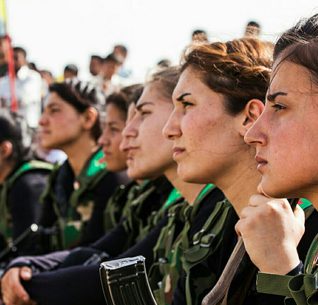
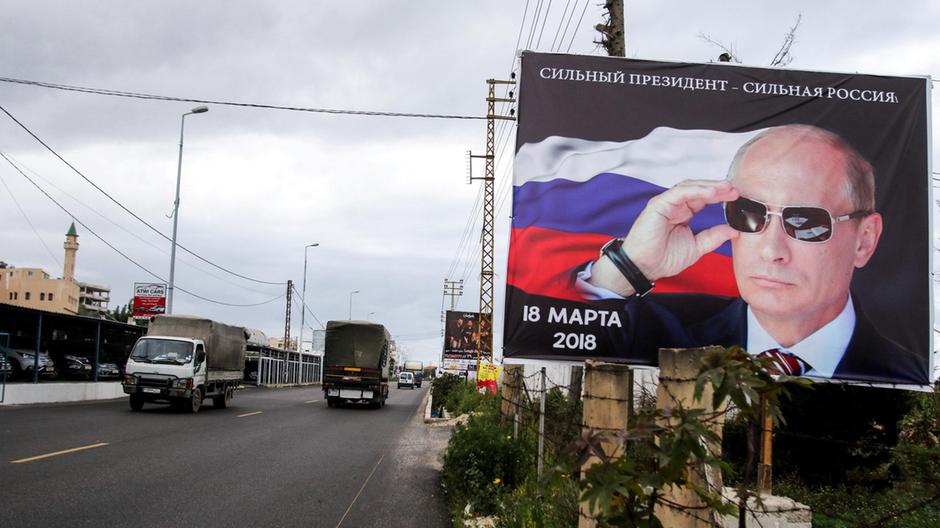

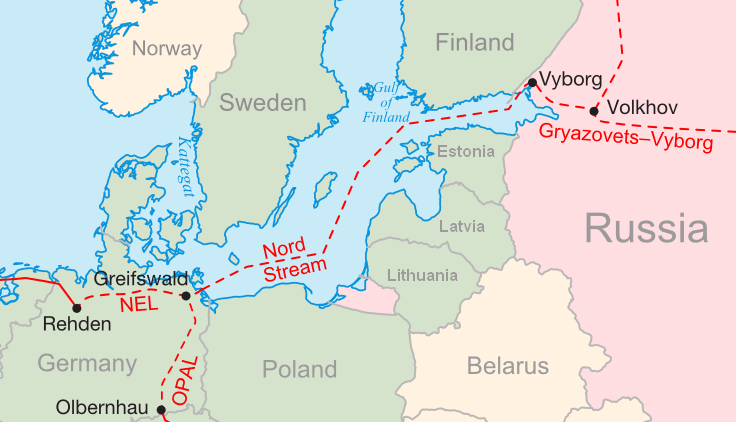
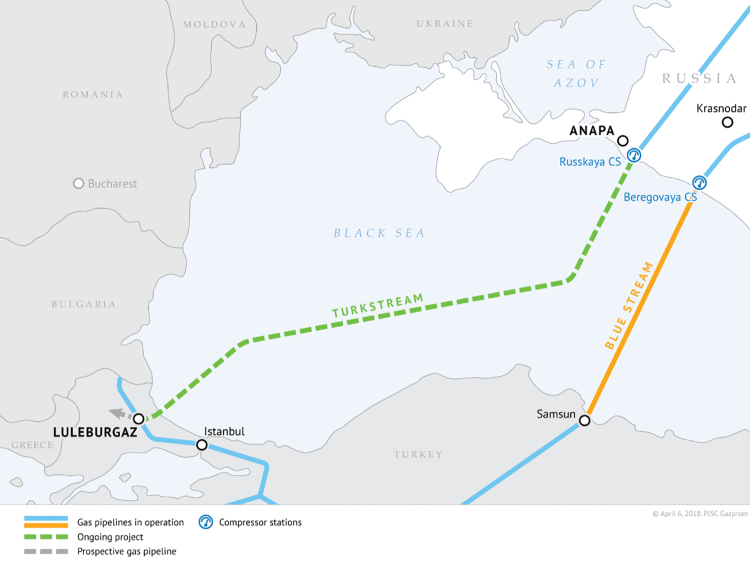
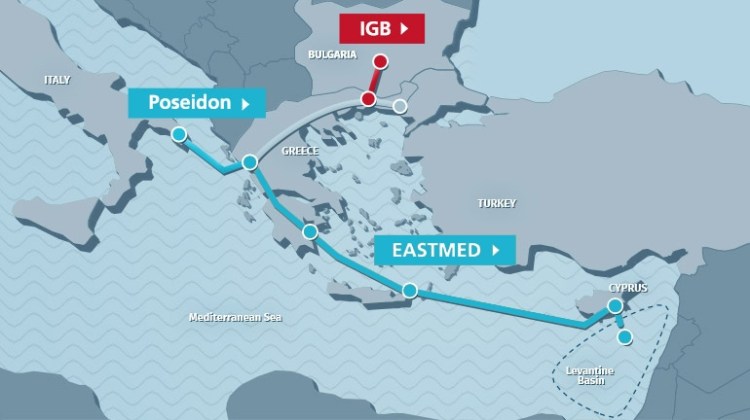


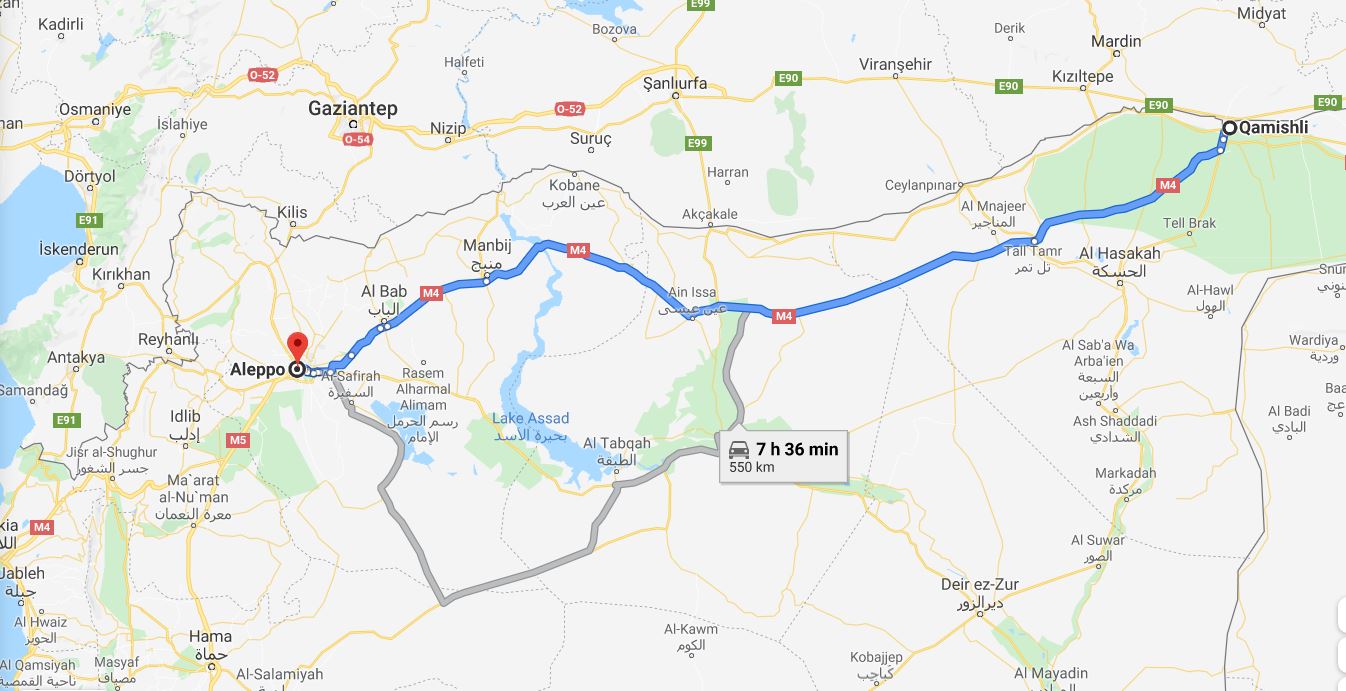
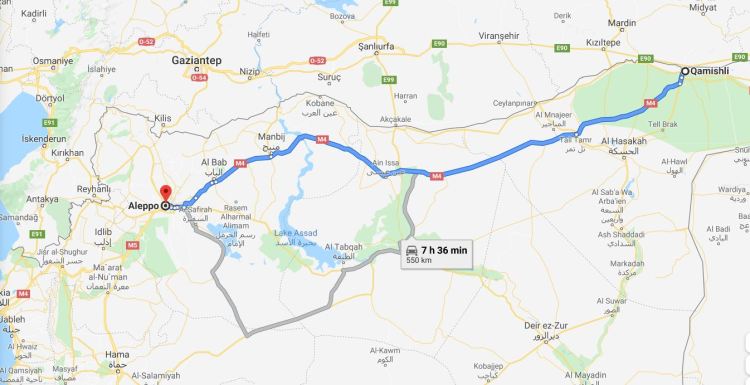
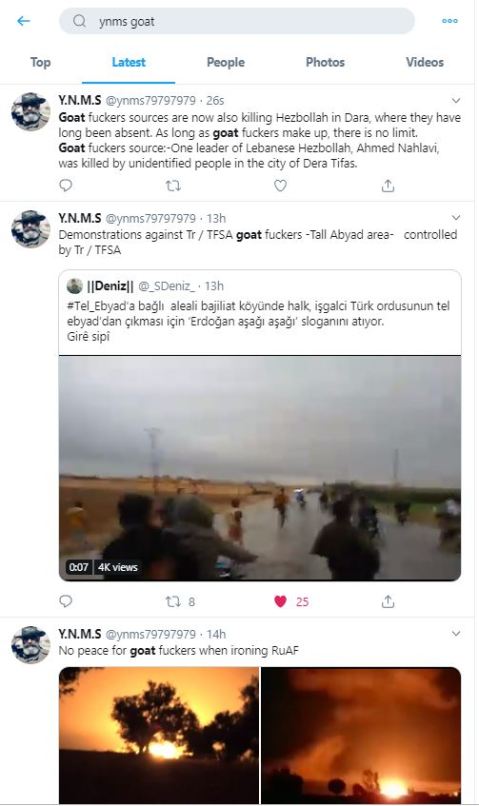

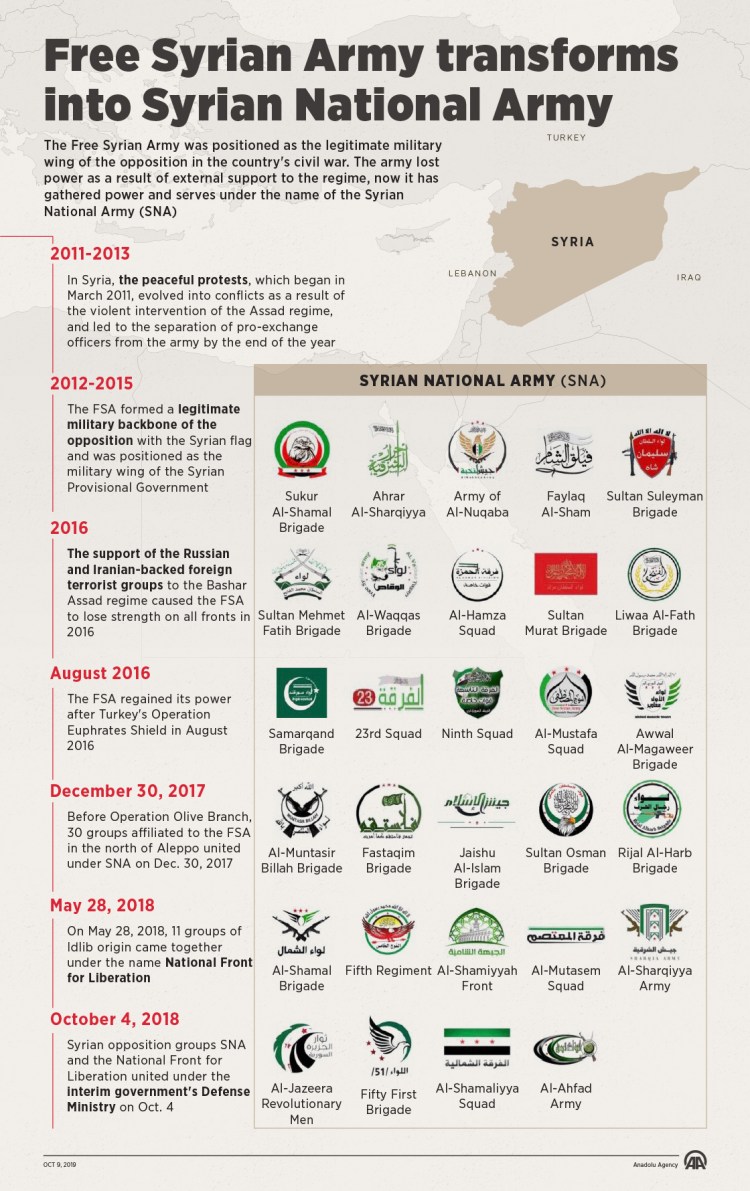

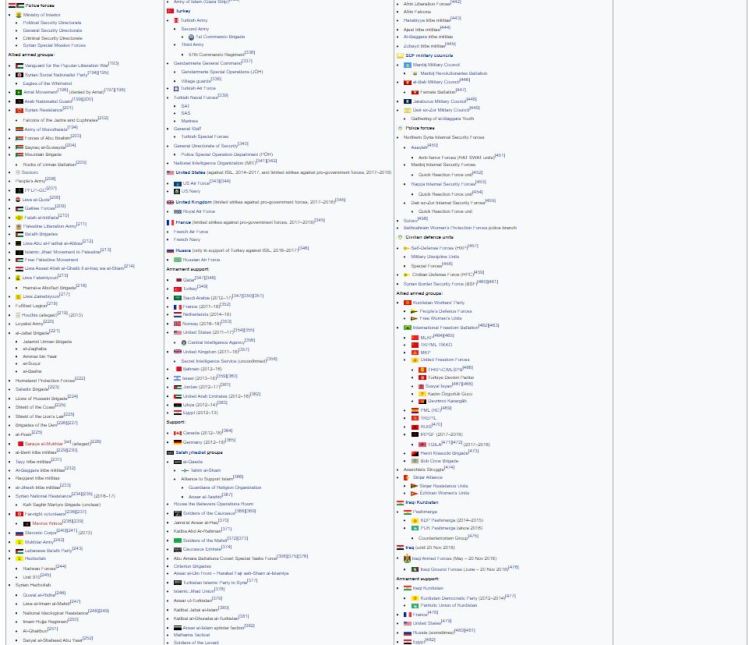






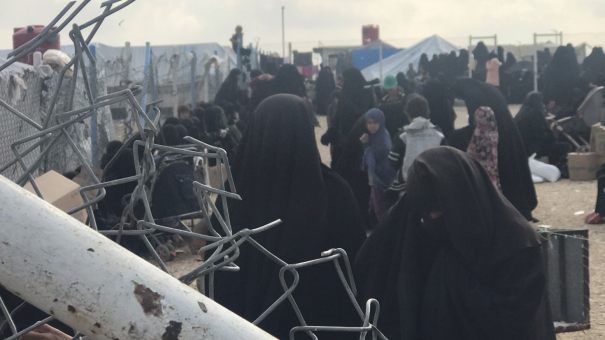
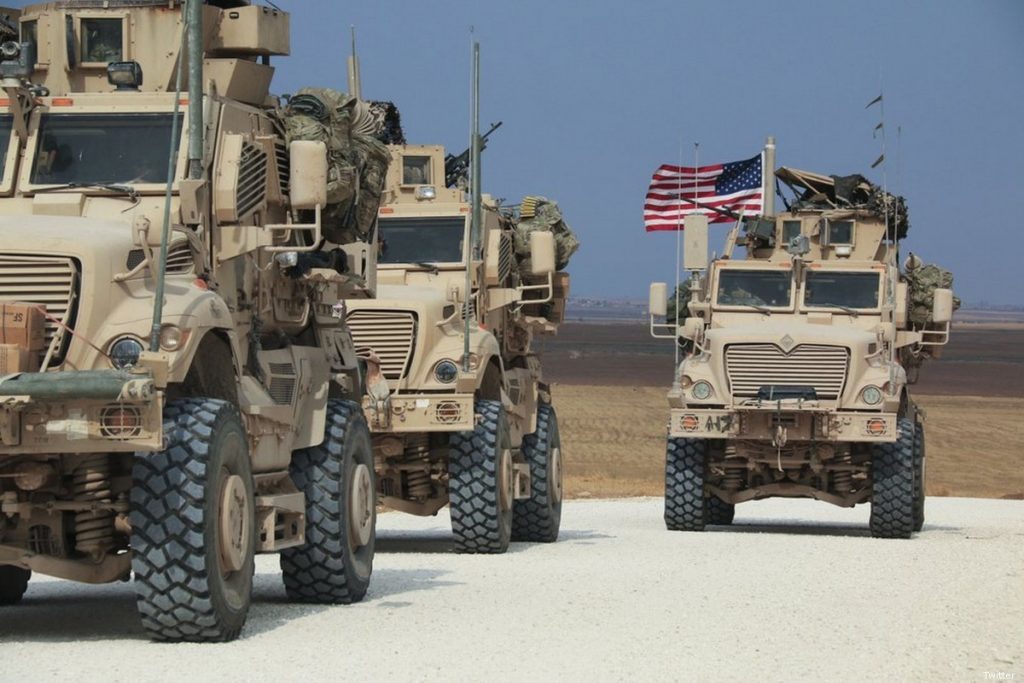
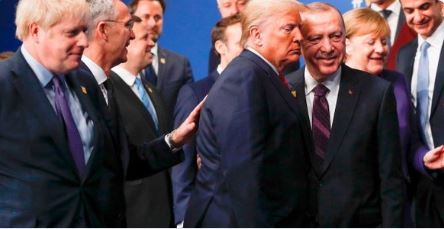

 Rojava to Rock